
Is the high black abortion rate a problem?

I’ll spare you the suspense: I think not. Now read on for the rest.

Here’s my position: I’ve never had an abortion. And I don’t think I ever will. I have friends and family who have. I am staunchly pro-choice. I was kind of pro-choice before having children. I am even more so after having children. It’s a responsibility only those who truly want to do it should take on. We don’t support parents in this country. And arguments about all the people who want unwanted kids are BS. Look at how long kids stay in foster care. 
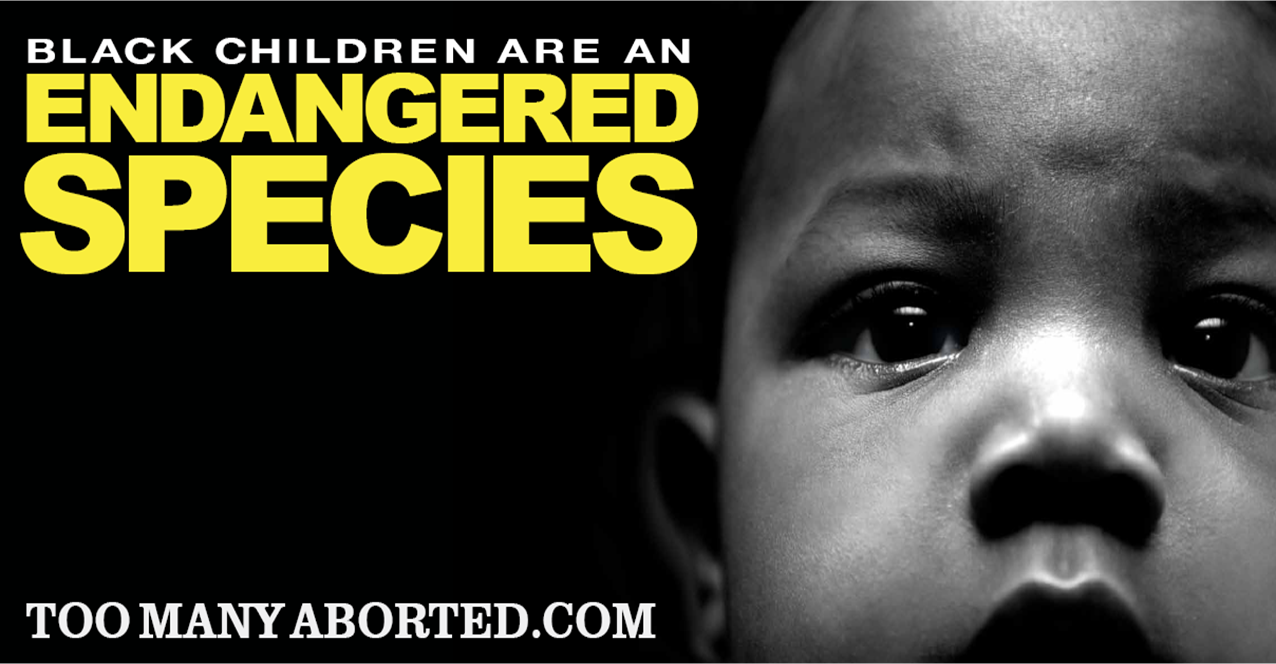
So here’s the deal. As I regularly troll the internets for stories about black children and black mothering, I came across this op-ed from Dennis Byrne, a columnist at the Chicago Tribune, commenting on the billboards across the country that try to shame black women into not having abortions. Although he is neither black nor a woman (his words), he thought it his (duty? calling?) prerogative to comment on the “high abortion rate among blacks.” Here’s the gist:

Political correctness and ideological dictates discourage discussion of the culture of some black communities as explanative of violence, ignorance, high rates of abortion and other dysfunctions. But for those communities, culture is described by the growth of a matriarchy, as displayed by the many grandmothers raising their daughters’ children. By the absence of men in child rearing. By men who prey on young women who have never learned what to expect from decent, caring and responsible men. By the collapse of the family and the destruction of men’s and women’s traditional, balanced roles in making children strong enough to resist the challenges of today’s broader culture of irresponsibility, casual sex, substance abuse and other plagues.

In this op-ed, Byrne rehashes an old, but reborn, theory: that there is something intrinsic to black “culture,” independent of any outside factors, that accounts for the disproportionate numbers of abortions in black communities.

This makes my blood boil. One, because as a scholar who studies culture, he doesn’t know what he’s talking about.

First: on culture. Byrnes defines culture as “the behaviors and beliefs characteristic of a particular social, ethnic or age group.” Um, not quite, homie. Where do these beliefs and behaviors come from? They don’t just spring forth from the middle of the earth, waiting for people to adopt them. Culture is not “created” nor does not exist in a vacuum. Culture is both responsive to and part of shaping structure; many sociologists, such as myself, explain culture as the opposite side of the coin to social structure. The growth of a matriarchy (which is largely a myth, I believe to demonize black women) and the dearth of men available to actually father their children are events, happenings; they are not culture. Nor did not happen outside of the influences of social structure. Many factors colluded to affect that outcome: collapse of manufacturing industry; subsequent high rates of black male unemployment; mass incarceration; felon disenfranchisement; the crack cocaine epidemic.

Culture reflects options available within a given social structure. Yes, people make choices, and they have agency. But agency is not what we think it is as total free will, ability to choose anything and everything. Culture reflects what one BELIEVES to be their options, what one can do with what one is given. So black “culture” can never be defined as one thing, one way of being, one way of behaving. Because we live in a myriad of structural positions, and some of us have options that are not available to others and vice versa. And among the options, some of us choose #1 and others choose #4 and so on.
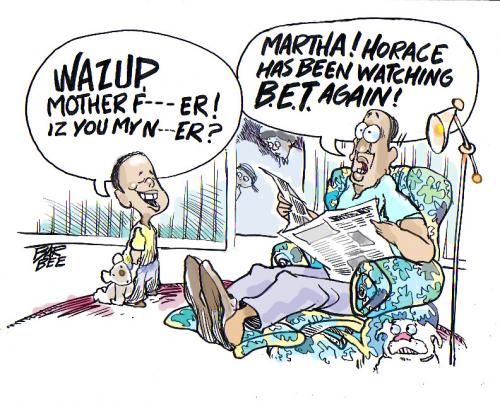
THIS is not all there is to black culture, despite the moniker...

The “collapse” of the family structure is less to do with any possible independent effects of culture than with the structural effects of class. As I’ve discussed here before, a class structure that allowed for families of any configuration to make a decent living would have more time for child rearing. A school system that did not grossly and blatantly favor wealthier children over less wealthy children would be one in which all women could be educated enough to take care of themselves, and not fall “prey” to vicious and violent men.

If you want to change how people behave, you need to change their options. You need to change what is available to them. You need to change their structural reality.

And two, if the pro-choice side is the “right” side, why should we care about disproportionality?

Making arguments about cultures connection to disproportionality makes clear that true intentions are to get rid of the option to abort altogether. For if you are pro-choice, do you even care about disproportionality? Or rather, should you? If you believe that anytime a woman gets pregnant but for some reason – any reason – does not want to go forward with that pregnancy, she should have the right to choose to end the pregnancy, then every abortion should look the same to you. Regardless of the race of the woman. Disproportionality then appears to be that black women are having more unwanted or mistimed pregnancies, but are also using this option, the option to terminate, more than other women.

This can be interpreted multiple ways, but I’ll offer two that I find the most liberating. First is that black women are more aware of their reproductive rights, are more in tune with what they do and do not want, and are more willing to choose to abort. If you are pro-choice, this doesn’t seem to be a problem – black women are, in not the best language, taking advantage of exactly the right Roe v. Wade stood for – the right to make a decision about your body without anyone else second-guessing you or interfering. Calling these numbers a problem feeds into the idea that black women are not capable, or are somehow ignorant (or culturally deficient), of making this decision for themselves.

Second, this can be interpreted as other women – white, Latino, Asian – are not as gender liberated as black women. Bryne in the article above – as do many men – lament the “matriarchy” in the black community as a disruption of “balanced” gender roles. Who said gender roles had to be balanced? Instead of considering that black women are having too many abortions, maybe women of other races are having too few. In other words, women of other races are less willing to have abortions when they actually would choose to under different structural circumstances. Again, with culture as the flip side of structure, women of other races may feel as though their options (culture) are limited, despite Roe v. Wade, given their structural position.

This is not to say that black women do not experience and live under patriarchy. They absolutely do. But the facts are that black women are less likely to marry than other groups. Not being legally bound to your oppressor is sure to make a difference.

Spoken from a sociologist who studies culture: If you want black women to stop having abortions, if that is your true goal, you need to change their world. You need to make it so that there are no reasons for why a pregnancy would be unwanted or mistimed.

A billboard does not change the world. It just pisses people off.

Hey Michigan: These Are Children

Are you: Homeless? An ex-con? Pregnant? A single mother? BLACK? POOR? In foster care? Well, then watch out – you are a prime target for being denigrated, disrespected, and dehumanized in Michigan.

Not only are homeless women being arrested and charged with larceny for enrolling their children in the wrong school district in Connecticut, but several states away in Michigan, single, pregnant, and Black teen moms have been arrested in Detroit for staging a sit-in in their school to protest the fact that it will be shut down at the end of the school year.

Sarah Ferguson Academy is one of the only schools in the country that educates pregnant teens and teen moms. This schools raises its own money through its agriculture program – a farm, in the middle of Detroit. 90% of its students go to college – any college, somewhere, anywhere, and get money to go there. This school makes sure that these children – because they are still children – are getting an education, learning how to be parents, making a better life for themselves and their kids.

But now that Michigan state has taken over Detroit – yes, they’ve taken over the entire city – a “dictator” has decided to close a bunch of schools, including this one, unless a charter organization agrees to take it on. And the charter can do with it whatever it wants, which means either way, this school will probably close. But these girls value their education SO MUCH that over Spring Break they organized a sit-in, and occupied their school to protest the dictator’s decision.

And what does the state do? Arrest them. (Please watch the video here. Watch the police officers manhandle pregnant teens and turn on their sirens to drown out their shouts.)

***

It’s not only in the schools. A state senator, in order to save money, recently introduced a proposal to restrict foster children in their apparel choices. For their clothing allowances, which nationally are only about $200 a YEAR, Sen. Bruce Casswell would propose that this money could only be spent in thrift stores.

Yes, you read that correctly. Foster children would only be allowed to purchase used clothing. Apparently since this Senator never had anything new as a child, neither should children who are not living with their biological parents and are in a limbo state of extremely stressful uncertainty.

[pause]

Update: After the story went viral, the good Senator amended the proposal to say that the children could buy new clothes, but wanted to make sure the gift cards they received would only be used for clothing and shoes. Because of course, foster kids can’t be trusted to only by clothes. They might spend it on candy and soda.

I’m sorry, but Michigan is coming off like a state that hates children. Poor and/or black children to be specific. And it pisses me off. What about you?

What you can do:

Donate to cover the girls’ legal fees

Contact the good senator

Past is Prologue?

Listening to talk radio today, host Warren Ballentine, made a statement that made me think, then shiver. In talking about the prison industrial complex  he mentioned that young people are allowed to drive at 16 but that they are unable to rent cars until they are 25. He cited a study done by automobile rental companies that the pre-frontal cortex (responsible for complex decision making, ability to delay gratification) is not fully mature until age 25. So in order to reduce the likelihood of damage to their fleets, most car rental companies err on the side of caution and don’t rent to those between 16 -25. Mr. Ballentine’s point was that car rental companies recognize that more mistakes are made by this group (as drivers), but that, as a society, we have decided that mistakes made at 17 or 21 should follow a person for the rest of their lives. The mistakes he was referencing in particular are non-violent felonies.

Convicted felons, in general, have a very tough time re-entering the workforce. There are certain career choices that will NEVER be open to them (lawyer, real estate agent, any position having fiduciary responsibility). This severely limits their income earning potential, and subsequently, their ability to adequately support themselves or their families. Of course this inability decreases the stability of communities that are disproportionately represented in the prison/parole system.  Which community is that? You get 1 guess.

As a mother of a teenaged boy I worry much more about him becoming involved with the legal system than drugs. We have gone over how to interact with the police should he have to (invoke his right to remain silent and then shut up. The end.). But let’s say he is convicted of having a bag of marijuana on his person (that he was *holding for a friend*) at 18. Does that conviction mean that he shouldn’t ever be able to pursue a career as a lawyer (his current aspiration)? Should checking that “Have you ever been convicted of a felony?” box on a job application automatically rule him out of opportunities when he’s 30? The way the current criminal justice system works that conviction is a forever indictment of his character, potential and livelihood.

Should it be? For non-violent criminal offenders, should their records be stricken after a prescribed period – 2, 5, 10 years? How would this impact society? All I see is upside – the ability for people to support themselves, be productive members of society.

For the prison industrial complex there is incentive in maintain the incarceration status quo, and the post-jail system we have in place doesn’t discourage recidivism. Private companies that run jails need prisoners to be profitable so the trend over the past 20 years has been to increase ways become a criminal and, once identified as such, to maintain that status.

As a community I think that we should really give some serious attention and energy to how convicted felons are marginalized. Even if the kids of the CocoaMamas never set foot in jail, somebody else’s child needs us to advocate so that they can live productively after the fact.

Media Monday

Council on Contemporary Families Releases “Unconventional Wisdom” on Family Diversity

One of the most unconventional findings was that “the darker an African American or Latino student rated his own skin tone, the higher his academic performance, academic confidence, and social acceptance.” This relates directly to the discussion we were just having about colorism, and whether what the teenagers in the video were saying accurately reflected what they thought about skin color and beauty. I’m tempted to want to spin these results to so that they can co-exist with the teenagers reflections being accurate, but I can also see how these can represent conflicting findings.


Minority Children Four Times More Likely to Start Poor, Stay Poor

“In Singapore, the government deposits small amounts of money into an account for each child born, Shanks said. That money can be withdrawn to cover costs such as extra tutoring for children or higher education for young adults. Or it can sit, earn interest and become the sort of nest egg or emergency fund the child’s future family may need. As a result, almost all families in Singapore–regardless of income–own their own homes.”

Yet in this country we act as if people with assets – homes, stocks, etc. – aren’t doing the same thing for their children and grandchildren. When you start life off with a nest egg, even a modest one, the monetary laws of compound interest make it so that the money grows, without you doing a single solitary thing to earn it – no bootstrapping necessary. But for poor black children? We act like their situation actually has something to do with their or their parents’ character, not with historical, systematic denial of the opportunity to build wealth according to race.

“Right now, 12 percent of white children live in poverty compared to 33 percent of Latino kids and 36 percent of black children.” And you think we live in a post-racial world?


Racial Politics: The “Business” of Domestic Private Adoption

On a related note, over at LIE there is an article about money and black babies and adoption. Black babies usually “cost less” in private adoptions because there are more of them than white babies and they are harder to place than white babies. They are harder to place because there are more white adoptive parents than black adoptive parents, and the norm is to match babies within the race. I say this is related to the post above because, as one commenter says, perhaps much of why there are more black babies is due to the poverty that many black mothers find themselves in when it is time to give birth. In any case, transracial adoption is on the rise, for even at “rates” as low as $4,000 for a black baby, compared to nearly $40,000 for a white baby, getting a black baby is a deal. White adoptive parents come to “prefer” a black baby once they realize how much better the black baby fits into their budget. But its a secondary consideration; the White adoptive parents “settle” for the black baby, only after having taken the price of the child into account. Fucked up, right?

peep this: in case you thought we were post-racial

There really isn’t much to say, as the video speaks for itself. Colorism in the black community is as much a symptom of racism as is white privilege; both stem from a belief that the whiter, the better. While we can applaud that more black faces are being heralded as beautiful, the truth is that lighter skinned black women with longer, less nappy hair is considered to be more beautiful than darker-skinned black women with shorter and nappier hair.

If you don’t believe me, watch the video again.

The question becomes: what do we do about it? Do light-skinned black folks have some affirmative duty, like we call on white folks, to call attention to their privilege in order to denounce it? I don’t know if I “qualify” as light-skinned (that sounds so ridiculous); at various points in my life people have said yes, and others have said no. But I’ve experienced some of what these kids are talking about in the video. I remember a boy saying that he liked my knees because they weren’t dark!

Whatever my classification, I’m pretty sure, according to my sources, that my children are considered light-skinned. And they have less nappy hair (although you wouldn’t know if the way they carry on.) And I already see the privilege that is conferred on them because of it. I’ve heard the comments about their “good grade of hair” and how “beautiful” they are; I don’t remember anyone saying I was beautiful as a child. And while I can’t really stop what other people say, I’m trying hard to make sure they don’t internalize the messages; I try to have every shade of black represented in their books and toys, and talk about how gorgeous all the colors of black are. Both of their grandfathers are darker-skinned, but it doesn’t help that we aren’t particularly close to those sides of the family.

Yet on the other hand, I want to be able to tell my daughter that she’s beautiful. I want to be able to do her hair in her ponytails and say, Little A, your hair is so pretty. I hope that she understands that I am making an individual judgment about her, and that my hair being loc’d reinforces that black hair in its many configurations can be beautiful. But I also don’t want her to grow up with a complex about the whole light-skinned thing either, just like I’m sure white folks don’t want their kids to grow up with a complex about being white.

Ya feel me?

Reclaiming the Narrative

Written by CocoaMamas contributor Rachel Broadwater; a version of this first appeared on Love Isn’t Enough here & here.

After years of black motherhood being equated with abandonment and neglect, it was pure joy to see the Obamas walk across that stage to accept the nomination and then the results of the election.  Those nights – and those ever since – have been an affirmation for those of us who were what they are: A strong, loving, playful, and spirit filled African American family.  The Obamas, of course, are not the first nor will they will be the last, but they are in the here and now, tangible and concrete.   It is important to note the Obamas – including Marion Robinson, First Lady Obama’s mother who has been hailed by both of them as being instrumental in the development of their daughters – deserve every bit of praise.  It is clear that they not only are extremely devoted to their children but also to their own relationship.  If there were to be a soundtrack for the Obama family, it would be Stevie Wonder’s “Knocks Me off My Feet”.

They are the flip side to the many single black women – grandmothers, aunties, sisters, and every other in between – who are indeed mothering under siege.  These examples seem to be the only dots on the spectrum.  For those of us who seem to embody the Obama model it can be a lonely, isolating and conflicting experience.

I am a 34 year old mixed race woman – Puerto Rican father and African American / Cherokee mother – who identifies herself culturally as an African American- who mothers 2 amazing little girls: my daughter, 8, and my niece, 9.  I have been married to an awesome guy for 10 years and on our second wedding anniversary our daughter was born.  I work in pharmacy, a profession where there are more women than men.   Because of this, I would find myself in conversations with the pharmacist- sometimes white but frequently themselves or their families hailing from the Middle East or South East Asia – about parenting.  There was almost always a look of surprise and wonderment when I would talk about the regular every day struggles of mothering.  I could almost see the thought bubble: “Oh my God she is just like me!”  Usually at some point in time they would admit to being pleasantly surprised at how devoted I and my husband were to our girls.  I was different, you know, unlike “those other” parents.  Meaning “regular” black people.  I would insist that every mother regardless of race, sexual orientation, religious affiliation, socioeconomic or marital status wants the best for her child whether they have the resources or not, and I was not, in fact, an anomaly.

But I admit that I do feel invisible. There are very few mediums where black mothering is normalized.  Normalized brings to mind for many a two parent, heterosexual, often Christian family.  That is not what I am talking about.  I mean I want to see black and brown mothers in advertisements for safety systems, breastfeeding campaigns, and educational enrichment pitches.  I want to see sensitive portrayals of black and brown women as being nurturing, caring, responsible, patient and concerned about their children.  I would no longer have to endure a picture of a black child automatically followed by these or any combination of words: challenge, crisis, chaos, dangers, death, neglect, and dysfunctional.

To black and white people I did right.  I got married then had children.  “You are a good mother” they nod approvingly.  It’s like because I married when I married that I automatically get 500 points on the SAT’s of parenting.  Why should that be?  There is so much discussion concerning the ills of out of wedlock mothering in spiritual, economic, and emotional terms.  Single mothers have their actions shredded apart.  People feel it is justified by pointing to the high incarceration rates, poverty, violence etc. but is it any more right for a married woman to have a baby to save a relationship? Is it right for a married couple to bring a child into a household where the father is emotionally distant or even cruel because of their own unresolved demons?  There might be a temptation to point out that society “pays” for out of wedlock children but don’t we “pay” when children are conceived under the matrimonial fairy tales that don’t work out.  But there are a whole lot of ways to pay for a baby.

There seems to be a concerted lack of nuance in the discourse in both white and black spaces. If white spaces don’t acknowledge my presence black spaces insist only on the respectable.  In a way I can’t say that I blame them.  Slavery did not allow for slaves to be recognized as humans much less families.  Even if an enlightened slave master allowed for slaves to be married, it was never legally binding.  At any time these two people, who chose each other despite the pure hell of slavery, could be separated and sold along with any of their children or told to mate with another salve who had their own family or did not and simply had no desire to breed.  When freedom was won the majority of slaves legalized their marriages.  They may not have had much but they had each other.  Literally.

So against that backdrop it is no wonder when pastors look out into the pews of their church and see the couple sitting next to each other, an arm draped across their partners back, maybe with a child or two on either side, maybe in between, they are not necessarily seeing patriarchy and submission.  What they see is a stone in the eye of the naysayers who use charts, polls, and studies to prove that these people sitting in church on a Sunday morning don’t exist.  There is no doubt that something pulls at you when you see a couple married for 40 plus years helping each other put their coats on.  It is pride, love, joy, hope, an abundance of every bit of positive energy in the world.  It is also tempting to stay rooted in that energy.  It is so warm and wonderful.  It makes me believe that I too will be in that number.  To believe that this is the right way, the only way, the best way.  But I can’t and I won’t.

Poor mothers do not automatically equate poor mothering.  The No Wedding, No Womb and Marry Your Baby Daddy/Mama movements although conceived with good intentions have left so many important threads blowing in the wind and it seems like few are interested in catching, examining and then tying them together.  Lack of comprehensive, fact based sexual education, the denial of mental health services (both in idea that it is needed and actual services), the lack of safe spaces or even language for men and boys to discuss their own feelings that are not steeped in patriarchy and the sustained unwillingness to deal with the effects of physical, mental, sexual and emotional abuse and how that affects interpersonal relationships all impact both parents and children alike.

The first step to correct this is the insistence that black women take back their own maternal narrative.  Take it back from whoever is mishandling it, whether the person is wearing a three-piece suit, a black dress with pearls, pastoral robes or jeans and t shirt.  This is your story.  You and your child’s.  There will be laughter and tears.  There will be slammed doors and cuddles on the couch.  There will be fear and certainty.  There will be clarity and bewilderment.  These things will happen at different times or maybe all at once.  Doesn’t matter really.  When you tell your story I will sit down and make myself comfortable, ready to listen to you.

Power to the Bebow

My daughter has recently become obsessed with the Reading Rainbow Theme Song. Tweeners like me know the ditty by heart, but when my toddler sings it, it sounds something more like this:

BYE-BYES *indecipherable* SKYYYYY
*indecipherable* HIIIIIIIIII
*babble* OOK!
*babble* OOK!
BE BOW-BOW!

Fittingly for a child singing about rainbows, she’s also started learning her colors:
“What color is the sky?,” I ask.
Blue!
“What color is the grass?”
Geeeen!
“What color is your skin?”
Rown!
“Yes, Baby,” I respond; “Your skin is a beautiful, beautiful, brown.”

It frustrates me that I don’t have more names for the spectrum of colors in the brown category. When pointing out the skin color of white characters in her books, I can use words like white, cream, peach, pink, rose, and tan. When the characters are black, I’m stuck with brown; maybe mahogany or cinnamon if I’m feeling really creative.* My lack of words for brown says as much about our dismissal of all things (and people) black and brown, as much as my internalization of that dismissal.

Despite the hole in my vocabulary, however, I’m trucking along anyway, determined to continue talking about skin color with her because I know the best way to raise a racist child is to avoid talking about race. I also know that in failing to talk about skin color with children, we teach them that the subject is taboo, making it difficult for them to have productive conversations about race later in life. I am reminded of this when my students, six weeks into a course on race in the public education system, still clam up at the start of class, awkwardly stumbling into language about “blacks” and “the races” only after insistent prodding by me. I am reminded of this by the guilty silence of my colleagues in response to observations at a recent faculty meting that we haven’t had a scholar of color give a talk at the school in two years. I am reminded of this by the radio silence I encountered in response to my explanation to a white peer that I picked a particular pre-school for my child because there were black dolls in the classrooms.

I am determined to raise a child who is comfortable talking about race, skin color, and it significance in our society. Although it’s likely wishful thinking, maybe her generation will revolutionize the discourse on race in our country, finally acknowledging worth and beauty in the rainbow of skin color among human beings. In the spirit of such a revolution, I say Power to the Bebow!

*The author welcomes suggestions!

Doll Tests

Dolls have a particular significance in the lives of children. My daughter is just now beginning to form an attachment to her little brown doll, named, rather appropriately by her, “Baby.” She’s started moving Baby’s hand in a “bye-bye” motion, and now insists on putting Baby to sleep at night before going down for sleep herself.

I thought of my daughter and her Baby this week as I showed my students film of what dolls can say about childrens’ perceptions of themselves. The famous doll tests, used by social scientists in Brown v. Board of Education to prove that racial segregation caused self-hate and feelings of inferiority among children of color, have since been replicated. More than 50 years after the case, the results are the same: white children characterize black dolls and black images as bad, mean, and ugly; black children do the same.

And so, it was with intense concern that I scanned the toy boxes and book collections of two pre-schools I visited this week, in anticipation of enrolling my daughter in a morning program. My husband and I have managed without daycare for this long, believing we were the only caregivers certain to value her brown skin, kinky hair, and big brown eyes. But at twenty months old, it is now time for her to socialize more regularly with other children, and to form trusting relationships with other adults.

I searched the toys and books because I knew I could not count on finding other black children at the schools. Although the director of the first school I visited tried to pretend that she really had to think about the answer when I asked “Are there any black children enrolled here?,” she ultimately had to tell me what I already knew from visiting the classrooms: “No, there are no other African-American children enrolled at this time.” The response of the director at the second school was the same, although I did encounter one thing that I did not encounter at the first school: a black baby doll. In fact, it was a white child playing with a black baby doll. And, as I scanned the room further, I noticed pictures of children of color on the walls, and books featuring children of color on the shelves. A close look at the school calendar revealed a Black History Month event scheduled for next week. Noticing my attention to these details, the director of the second school said to me, “It’s important to us that we have more children of color here; in the past, we have gone to black churches in the area and made an enrollment push. We remain committed.”

Just a few minutes ago, I received an email from the 2nd director, notifying me that we had made it off of the waiting list, and were being offered a spot for my daughter in the fall. In the spirit of Brown, she will be a black child attending school with white children. Contrary to the spirit of Brown, she’ll be the only one. And yet, like the social scientists in the landmark case, I’m relying on the significance of that black baby doll and a child’s reaction to it, hoping that this time the doll says something more positive–more hopeful, even–about what the racial climate will be for my little girl at this school.

The Lottery

In the era of education standards and accountability, the debate regarding the potential of charter schools to reform American public education, particularly for children of color, has heated up. Against this backdrop, several films have recently been released about charter schools. In anticipation of a classroom discussion I intend to conduct about one of them, I recently watched the “documentary” The Lottery. In this case, the quotation marks are intentional, because boy, was this one shoddy piece of documentary work.

My critiques of The Lottery are numerous, but I’ll start with data, or the lack thereof. Sackler, the film’s director, did not attempt to provide viewers with any data about charter school performance compared to traditional public schools. But then again, I don’t blame her. If she had, she would have had to admit that the most comprehensive study of charter schools to date found that fewer than 20% of the schools provided its students with better educations than public schools, almost half offered comparable educations, and more than a third offered their students inferior educations. Talk about your inconvenient truths.

But the absence of useful data was just one of many failures in the film, with unfair portrayals of the major players in education reform being the next problem. The Lottery shamelessly demonized teacher’s unions without bothering to interview even one union rep or pro-union advocate in defense of the organizations. This, despite the director’s decision to interview, almost exclusively, pro-charter advocates, some of whom likened unions to thugs and mafiosos. Now, I understand that there are plenty of villains to cast in the education reform debate. Even if, however, the unions are every bit as obstructionist as the movie suggests they are, and are dumping bodies in the river to boot, it is only fair to give them the opportunity to voice their perspective. If the director’s intent was to pin blame for public school failure on teachers, that’s fine, but she then shouldn’t have called her film a documentary. She should have called it propaganda, because that’s what it was.

Moreover, I have to defend the unions a little bit on this one. Anyone with an understanding of labor struggles in this country has to acknowledge that unions can and do play a vital role in protecting workers’ rights. Although it is true that union contracts have often enshrined due process procedures that result in the retention of many sub par teachers, it is not true that due process in itself is inherently problematic. Nor do I buy the argument that because these sorts of procedures are “never tolerated in the private sector,” they should not be tolerated in the public. To the contrary, due process is the name of the game in the public sector, and for good reason. Teaching at a public school is a public job, funded by public dollars, meaning that all qualified citizen are entitled to the job. And if, after having given the job to a citizen the government wants to take that job away, there are procedures that must be followed, for the government does not have the right to arbitrarily take away from citizens that which has been provided for only by citizens’ grace. I agree that some of these procedures have gotten out of hand, and that if we are to take the teaching profession seriously, it has to become easier to dismiss underperforming teachers while rewarding effective ones. But we cannot, and should not, get rid of due process. You want the freedom to engage in both justified and arbitrary firings? Go to the private sector.

While conveniently avoiding relevant data and scapegoating teachers and the unions that protect them, the movie lacks any substantive discussion about the real problems with American public education: segregation; funding disparities; poverty; inadequate health care and food insecurity among students. Instead, the film misleadingly suggests that reform is synonymous with charters. And it does so while exploiting black people to make the point. Prominently featured in the film is the contentious battle between a Harlem charter school that petitions to be housed in a soon-to-be-closed-down failing public school, and the black and brown parents who protest the charter school’s petition. Between participant interviews and clips from the heated public hearings on the issue, you walk away with the impression that parents of color are ignorantly opposing the very movement that is going to save their children. Missing from the film is any legitimate analysis of why these parents are so oppositional or what it feels like for a community to have their neighborhood school closed without education alternatives for their kids; most of these parents, after all, will not be able to obtain a spot for their sons and daughters in the new charter school. She never considers what it does to a community when a center in that community–a public school–is shut down. Needless to say, I didn’t appreciate the way in which Sackler’s portrayal legitimated the cultural deficit model that is regularly foisted on black people in this country.

And as if that weren’t enough, I was disgusted by the film’s presentation of the actual lottery. As has become all the rage, many oversubscribed charter schools hold public lotteries, at which anxious parents and their children gather in an auditorium to learn whether their child has won a coveted spot at the school. The parents of students’ whose names are called jump up triumphantly, running to the front of the auditorium, ushering their children towards clapping teachers and administrators who welcome the child to the school. The parents of students’ whose names are not called sit in the chairs despondently, ultimately heading home, clearly defeated by their bad luck. It is heartbreaking to see the looks on parents faces who had pinned their hopes on wining a spot, and the sad faces of their children who realize that their parents’ devastation has something to do with their limited opportunities. These schools say that they hold these lotteries to illustrate demand in poor communities for their services. I say they are exploiting the hopes and dreams of these families, and their beautiful black and brown babies, for a cheap publicity stunt, and that The Lottery was complicit in that exploitation. Not surprisingly, only 1 of the 4 families portrayed in the film won admission to the featured charter school.

In defense of the movie, some say that it at least “started a conversation,” but I don’t think the movie did anything positive to further an honest and realistic dialogue about public school reform in our country. Most people who saw the film are not like me or the other writers on this blog who are knowledgeable about public school education. Most viewers don’t realize that crucial data is missing. They don’t understand why parents in the film opposed the arrival of one small charter school in exchange for the closing of their neighborhood school. Most people sat down with a box of popcorn, were entertained by the drama which unfolded on the screen, and walked away with a skewed understanding of charters as the answer, unions as the devil, and black people as backwards for fighting the closing of their neighborhood school.

When discussing the film with one friend who happens to be an educator, she used the theory of “structural functionalism” to discuss what is happening with public education: poverty and marginalization of many exists to ensure wealth and access for the few. As a person with a B.A. in sociology, I agree that the theory is relevant here. And yet, social science terms can problematically make societal issues seem academic, objective and neutral, numbing us to the real injustice that is operating in the background. I’ve got a better way to sum up what was going on in that “documentary,” the charter school movement, and in American public education in general: this is some racist and classist $hit.

Just An Innocent Question

I was born and raised in America, have a college degree and English is my first language. My 3rd grade educated grandfather felt that grammar and enunciation were important so I am, in fact, articulate. Thanks to a flat iron my natural hair is often straight and when it isn’t my fro earns me the exotic label more often than not. Perhaps the straightness of my nose contributes to that characterization; I guess I owe that and my love of a good drink to my Scottish heritage.

Why is origin of my genes a pressing concern in 2011? Why is the “Mixed” question asked with a tinge of hopefulness, as if a certain combination of racial pieces will somehow unlock a treasure trove of American post-racial goodies? It is so tiring to hear people run down the list of bits and pieces that comprise a broken whole. We are all brown Americans at varying levels of consciousness (or lack thereof). Investigating my ancestry in an attempt to reconcile my face with your perception of beauty makes me feel tired and sad for your limited vision. Maybe it’s just innocent curiosity, and you are a student of faces, an artist. It’s just that I’ve been a Black woman in America for decades so I’m skeptical/jaded/over it.

I’ll answer the question though…
 
I’m mixed with
Angst & fury
Melanin & moxie
Tenderness & tenacity
Hardheaded sensibility and cool logic
Fiery passions and childlike wonder
By turns memorable and able to move without being seen
All of these traits and the unspeakable longing of my ancestors
Combine in the greatest chemistry experiment ever.
 
Explosions
                Fusion
                                Synthesis
                                                Transformation of the highest order has taken place…
 
Every time I do not respond to provocation.
             Each tear that I hold back when I witness a hungry child.
             As I stifle screams, knowing that Black men are jailed for profit
             When I don’t give in to the lightheadedness that washes over me when I hear a mother’s screams, her child a victim of circumstance.
 
The fact that I am able to sit still and appreciate the color variations of a flower’s petals
Experience it with all my senses, and pick up on music playing softly in the background
 
…while Rome, in the form of my community, burns to a crisp
 
Is a testament to the perfection that is possibility
 
And what is a remix but a combination of possibilities?
 
So yeah, I’m mixed…