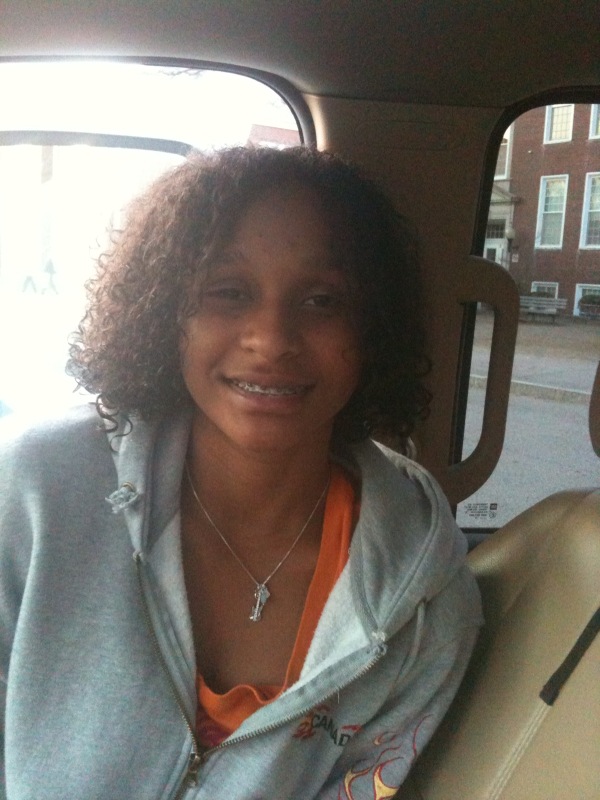
All About Me!

In exactly one week, I will be another year older.

That makes me an Aries. In fact, I’m an Alpha Aries. I’m the epitome of an Aries woman. I have this belief that people born in the first week of the dominant month are those who embody the most traits of that sign. I’m really into astrology, forgive me. If you cannot relate, my apologies. To read more about Arians, click here

My favorite holiday is my birthday. Seriously. I’m so amazed and grateful to have lived to see another year on this earth, so I take time to really celebrate myself.

But this year is special. This is the first birthday I’m celebrating post-marriage. It’s the first birthday, in a few, that I have not been deeply depressed. It’s the first birthday in a long time that I’m having a big party to celebrate. It’s the first birthday in my New Life.

And I’m SO excited!

Lately, I’ve really been focusing on uplifting myself by recognizing my accomplishments and the great things about myself, and understanding that I will only get better with age and time. I have the tendency to be overly critical of myself and I’d like to say that’s because I’m somewhat of a perfectionist. I want to be the best! But in true Aries form, I start everything with gusto and passion and then grow extremely bored shortly after beginning. This leaves me feeling like a failure for having little follow-through. But, I’m moving away from being critical and focusing on being celebratory.

I’ve been through a lot these last two years, this last year especially. I feel it’s my time to shine! When better to fully embrace that than on my birthday?

So, here’s to me! I’ve come back from what felt like the depths of hell, a few scars, a few bruises, a few set-backs, a few wrong decisions… but I’m here. I’m here and I’m growing stronger every day. I’m here and I’m believing more and more in myself and what I can really do now that I’ve been relieved of so many burdens. I’m rediscovering myself and loving all of the new and wonderful things I’m capable of.

It’s all about me!!!
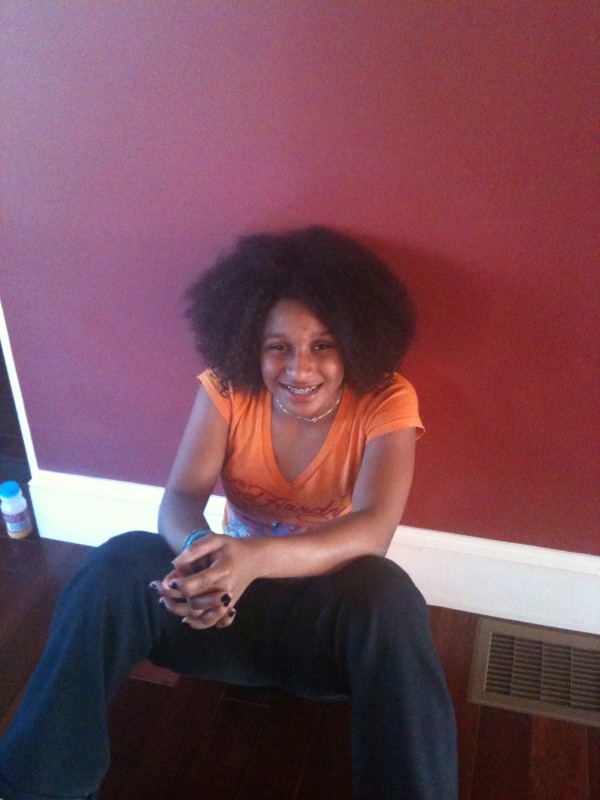
Pre-teen Bean

When my niece, who we affectionately call Sydni Bean, was born, I released all the built up anticipation and excitement of being a first-time Auntie by writing on my high-school classroom board, “I’M AN AUNT,” along with all of her vital statistics in perfect bubble-letters. It has been nearly 13 years since then and I am still in awe of her beauty and brilliance. She is perfectly cool, much more like me, than she realizes. She has all of her mother’s intellect, and her father’s bravado, but she gets her unwavering sensitivity from me.

This past Thanksgiving as her father was projecting images of all the kids onto my  livingroom wall he came across a picture that she said she didn’t want shown. She said, “I don’t like that picture, it looks like I have an afro.” So I ask, “like that would be the worst thing in the world?”  And she piped back, “yeah, it would!” I think I would have been able to more effectively articulate the “Black is Beautiful!” discourse that I know I have in me, if I wasn’t hurt personally as I stood there, with my afro, poised to affirm my niece’s beauty. Hurt, not as much by her desire to disassociate herself with the fro, as I was by the smile I also noticed on my husband’s face when she said it. It would have been funny to me too I guess, if I wasn’t so “sensitive.” (That being said I have also had a heart-to-heart with my husband where he admitted he likes my hair “straight-er.”)

My family, like many black families, has some ugly hair politics. I too, am to blame. I have not consistently worn my hair natural and I think it is because I fall in and out of love with my natural hair. I do not love my hair in either state, truthfully, and I’m also just not a hair person, but when I periodically “loved my hair,” it was either in a permed, short, precision cut, or in a perfectly unruly head of natural twists. Go figure?

Recently, my niece has expressed a desire to her mother to wear her hair natural. (She has never had a perm, but by natural she just means curly, not flat-ironed) She also, cut it in a bob. My sister sent out the pictures, and asked the troops (my mom, me, her other aunts, etc.) to be affirming. My mom responded by stating something like, “where is the flat-iron?” 😦 which I now understand she believes was only because she presumed when my sister said a “bob” that she meant a straight-bob. I saw the first pic and said it was cute . . .

though I secretly could not understand why it looked so overproducted and wet. 😦

I saw the second pic, and i FELL IN LOVE . . .

I thought it was not possible for it to be any cutter and immediately responded by sending her other pics of women with fros and was so stinking delighted that i had someone else on the fro team. 🙂 Then i got the pics from a Bar Mitzvah she attended post-poof . . .

and I’m like what happened??????!!!!!!!?????????

I know that being a pre-teen is hard, cause let’s face it, it’s just not our best moment as women. But isn’t it supposed to be easier when we get older? Aren’t we supposed to “know better,” and love ourselves more?

Tanji is a wife and mother of three. She has two boys and one girl. She lives in Philadelphia, her favorite chocolate city. She is an educator and her first “baby” is now a Howard University graduate and a Cocoa Mama.

Rat Race, Continued

So my daughter didn’t get in to the one private school we had our hearts set on—the only one we applied to. Or rather, she failed to procure one of the two “girl” spots that were available to the pool of 41 applicants for first grade—one spot went to the sibling of a student and the other went to, who knows, some miracle-child whose parents have undoubtedly been doing their happy dance all weekend.  Or maybe not, maybe they were some high-flying billionaires or society folk who knew they had it like that all along.

My girl made it through the first several hoops—the IQ test, the interview, the playdate—only to stall at the very last stage, the actual selection part. I got the letter telling us we were in the “wait pool” on Friday, spent the Persian new year over the weekend just slightly bummed out, and called the school first thing on Monday to see what “wait pool” means exactly. We had been told in the past that everyone is put on the wait list, that they don’t reject folks for political reasons.

By the time 48 hours had passed and I hadn’t gotten a call back, I started to read all kinds of things into it. I was also talking to a couple of other moms whose kids were in the wait pool too—albeit for different grades. I started observing an interesting trend: we were all talking about our rejection letters in language that I’ve used in the past only to describe relationships. As in: “I thought things were going so well.” Or “The things that were said made me think it was meant to be.” Or “I felt so much at home that I thought maybe the feeling was mutual.”

And once I recognized that, I just had to step back and laugh. What the heck were we all talking about exactly? Was this still about our children? Or something else entirely?

I decided to consciously separate my wish for my daughter to have the best education, the best possible early start and the most conducive learning environment separate from my own EGO!

This is not about me. Or at the very least, it shouldn’t be.

I also decided to accept that things happen for a reason and we almost never know why a path takes an unexpected or undesired turn.

I decided to accept and submit.

And just when I began to feel detached, the phone rang.

It was the school.

There were only two wait pool letters sent out to girls and my daughter is one of them. She is a strong match and will likely be the next person to be offered a spot if one becomes available.

Having said that, there’s not a huge likelihood that a spot will become available before the end of the summer.

Either way, we’re fine. Healthy. Thriving. Grateful.

Color Her Gone

The instructor of my “Home With Baby” class likes to tell us that breastfed babies are “color me gone;” having been properly nurtured at the breast, they eagerly run off to explore their environment, checking in with mom only momentarily before heading off again.  This week my daughter started crawling, and she is definitely gone!  Previously having been content to be held and carried around the house, she is now perpetually squirming in my arms, wanting to be placed on the floor.  Once down, she quickly moves away from me, off to examine some new corner of the room.  While I don’t believe that breastfeeding is a requirement for raising a “properly nurtured child” (whatever that means!), I do believe that one of our first tasks as parents is to create with our children bonds so stable and secure that they develop the courage to head out into the world without us.  Having cultivated that courage through nurturing, our second task is to let them go.

At only 9 months into motherhood, I know it’s too early to start writing overwrought pieces about letting my baby go.  But the truth is that I’ve been letting her go in small ways almost every single day, although figuring out when to do so isn’t always easy.  My daughter’s first solid food was Cheerios cereal.  In the beginning, she couldn’t eat them without assistance; they would stick to the palm of her hands, or she would drop them on the way to her mouth.  She would become frustrated, sometimes crying and pulling her hair.  It broke my heart to see her so discouraged; my stomach literally turned in knots. And so, when she started to cry, I quickly picked up a Cheerio and placed it in her mouth.  But eventually, I had to stop helping, leaving her to independently develop the killer pincer grasp she uses to accurately pick up the cereal today.  I had to let her be—had to let her go—so that she could discover her capabilities by herself.  A few weeks ago, she started trying to pull herself up into a standing position.  Her frustration again presented itself and in response, I obligingly placed her in the upright position she desired.  Again, however, I had to let her go.  Last Thursday, I walked into her room after she had woken from a nap to find her standing at the railing of her crib.  The smile on her face as she watched me enter the room made it clear that my delight at her mastery of this skill was matched only by her delight in having realized that she was capable of the mastery on her own.

This process—this letting go in small, but regular, intervals—can only end in heartbreak for me.  My husband and I already joke about the tears we will both shed when we head home after dropping her off at college for the first time.   We dramatically envision watching her image grow smaller and smaller in the rearview mirror as we drive further and further away.  We imagine that it might take us days, even weeks (but not too many weeks), to fully embrace the return of the freedoms we gave up 9 months ago: going to the movies or eating at a restaurant on a whim; watching TV late into the evenings, with no threat of a 3AM feeding; sleeping as late as we’d like on Sunday mornings.  And yet, we throw ourselves completely into the process anyway.  We hold her, and kiss her, and rock her to sleep at night.  I go to her if she does wake at 3, and sing and nurse her back to sleep, waiting until she is completely limp to place her in her crib.  I don’t force her to engage with people with whom she doesn’t want to engage.  I expose her to new places, new noises, new people, all while holding her, waiting for her to ask to be put down.  Her father’s is the first face she sees in the morning; mine is the last face she sees at night.  To the best of our abilities, we try to show her that she is secure with us; that despite the turbulence she may encounter in the world, there will always be peace in our arms.  She is now taking off without us, barely casting us a glance over her shoulder as she crawls across the room after an object that has caught her interest.

Sometimes when I’m playing with her on the floor or in the rocker, my daughter uses my body to pull herself up.  Once standing, she clumsily throws her arms around my neck.  Usually, she is after an object behind me, or eager to touch the cushion on the back of the chair.  Every once in a while, however, she lays her head in the crook of my neck, and becomes still.  I quickly wrap my arms around her, for I know the moment will not last long.  I breathe in her sweet baby smell, and try to hear the message I believe she is conveying to me: “don’t worry mommy; I’m always leaving you, but I am never really gone.”  And just like that, a second later, she is off again, exiting my arms as quickly as she entered them.

Cocoa Sibling Love

Here at Cocoamamas we have a rotation for posting, so I hope I’m not stepping on anyone’s toes. But today is my birthday, and something came up that I just felt the need to post. My brother is just 11 months younger than me, and as children we were very close. Over the years we’ve drifted apart a bit, due to geography and interests and time, but the love is still very strong. And he is a person that never quite ceases to amaze me.

I’ve taken a bit of a facebook break lately, but I knew that facebook lets everybody know its your birthday, so I logged on. And of course, lots of birthday shout-outs. But there was also a little note that my brother had on his page, entitled “My Sister: Carrying the Torch.” I clicked to his webpage, and I found this:

My sister is 11 months older than I. And being that we are our parents’ only two children, one of us is bound to be the first (or only) to do lots of things. Thankfully, i have a sister who has been willing to carry the torch, so to speak, for the two of us.

My parents were very adamant about us kids acheiving highly in school. My mother checked our homework nightly. So on the nights when my sister’s work was unacceptable and she went crying back to her room, my mother’s sharp eye for schoolwork excellence had been — luckily for me — dulled before viewing my efforts.

Naturally, my sister skipped a grade in elementary; attended the most prestigious high school in Philadelphia (the same HS that rejected my application two years later despite my having a sister as a character reference); went to an Ivy League college on full scholarship; and is now working on a Master’s (or is it PhD… probably both). My last semester of formal education? I was still falling asleep in lectures.

My sister went and had her own kids first, relieving me of the burden of the “kids” questions at family gatherings. Every parent wants their kids to have kids — my sister went and took care of that for us.

Well, today is Latoya’s birthday. And even though she rarely returns my calls in a timely fashion (or my texts at all), I love her and want to send her a public BDay well-wish. Enjoy it!

Of course, I have some objection to the phone call and text message thing (my mom just told me that yesterday, that he said I don’t return his calls) but I otherwise can’t imagine getting something more beautiful for your birthday.

Where are these kids’ parents?

I know that I tend to think a lot about discipline. I think it has something to do with raising cocoa males. I know what the stereotypes and barriers are that they will probably face because of their skin color. So, my hubby and I work hard to assure that our children are polite and well behaved.

We live in a county that is 90.7% White. We tend to stand out in our community. My oldest son is the only cocoachild in his school, grades K-2. At a recent PTO event, we were able to socialize with other families. We ate pizza, there was a raffle and then we all went to a high school basketball game for breast cancer awareness. While enjoying time with our family in the school’s cafeteria, we noticed all of the children getting restless. We didn’t expect our children to sit still during all of that time. We allowed them to walk around with their friends. After a few minutes, we began to see some children running, sliding across the floor and yelling across the room. Cliff and I looked at each other and asked, “Where are these kids’ parents?”

Cliff and I often wonder what the perception and comments would be if that were our kids. We often receive complements on how well behaved they are. For instance, I was recently shopping at a local department store. My children asked if they could walk over and look at some toys on a rack. I instructed them that they had to stay where I could see them. They said ok and quietly walked over to the rack. They came back over to me just a few minutes later and stood with me while I checked out. A woman in front of my in line was amazed at how well they behaved. She began to talk about how her children would have been running around screaming and all over the floor. I thanked her and reassured her that my children do have their times.

I am extremely honored that friends, family and strangers notice the politeness of our children. But, it’s not natural. I mean, I’d like to think that they just came out that way. But, parenting has occurred behind closed doors in order to get these results. For instance, I recall my mother having “the talk” with me before getting out of the car. Cliff and I joke about that all the time. But, we also have “the talk” with our children. What is “the talk” you ask? The talk occurs while you are parking your car or arriving at a location. During this conversation, the parent(s) lay out all expectations while at the location (i.e. do not ask for anything, behave yourself while we are in the store, don’t hit/fight your brother, etc.).

I don’t want people to look at my kids and ask where I am. Or, if they do, I hope it is because they are impressed by my child. I’m proud of my children. They represent me well. Don’t get me wrong. They fight one another and argue at home ALL the time. I know that the “real” parenting happens behind closed doors. The hug and cuddle time, the conversations about responsibility, reading to one another, dinner time, family outtings. All of these opportunities allow for communication and teachable moments. Where have your parenting moments happening?

Annie is a former CocoaMama who is married to her best friend of 15 years. They have two sons, a 6  year old and a 3 year old. She currently works at the Pennsylvania State University full time where she  is also completing her doctoral degree in higher education. She has worked and been a student for as  long as she has been a mother. So, she has had to learn how to simultaneously juggle all of her  identities. While she has not perfected this skill, she continues to assure that her family remains her  number one priority.

I’m Doing What’s Best, Right?

I am a newly single mom, trying to navigate through all of the “stuff” that comes with going through a divorce and establishing a workable co-parenting agreement. It can be difficult at times, and I was recently made aware by someone outside of my situation that my emotional connection to the situation is still strong. I find myself upset about things on higher levels than I should be, I have been irritable, listless, melancholic, and a myriad of other things.

I’m supposed to be happy. Yet, there are days when I just want to curl up in a ball and cry my eyes out. There are so many positive things going on for me, and I swear I try my best to focus on those things. But every now and then, the darkness grips me and negativity takes over.

I’m a woman in a non-traditional role. I don’t see my son every day. I see him about 3 weekends a month.  With my new job and the responsibilities that come with that, as well as my overwhelming need for “space” and time to get myself together physically, mentally, emotionally, and spiritually post-divorce, I gave over primary care of my son to his father and his extended family.  I’ve grappled with this since agreeing to it because, as one can imagine, the feelings of being a “bad mom”, feelings of selfishness, questioning if I will be forgotten all come up from time to time.

Why do we, as women, feel like we have to take on the primary responsibility of raising our children? And why do we, as society, look down more upon women who take the secondary role than men? It’s like we accept, or in some cases expect, men to not be equal parents, so when they leave or take the secondary role, it doesn’t seem to phase us.  But when a woman does it, there is little sympathy or understanding.

I’m doing what’s best, in my opinion, for my son, and most importantly, for myself.  If I’m not well… I can’t be a good mother. I just need some time, alone, for me to get it all together.

And I have to forgive myself for feeling negative or selfish about it.

Rat Race: One Mile Up and to the Left

In a little more than a week from today, we will be receiving a slip of paper in the mail that may change our lives in quite significant ways for many years to come.

When we first moved to California from New York City, our kids were still so young (1 and 2) that we hadn’t given a whole lot of thought to schooling. Right before we were leaving New York, though, I had the opportunity to observe how several of my friends—both the ones whose kids were going private and the ones who were going public—began maneuvering for the schools they were interested in. Now I have NEVER been good at “maneuvering.” My personality is such that I can speak to anyone and everyone unless I have an agenda or need something and then I can barely look them in the eye! It’s something of an oddity.  

And so I breathed a sigh of relief at the idea that we would be bypassing the competitive NYC school scene by moving to the “wide open” schools of Northern California.

Someone hand this woman a clue!

Since we had no idea where we would be living in the Bay Area, I decided to put in an application at the preschool where the child of one of our few friends here—a Stanford professor—attended school. I applied in May for a September start date, which I thought was more than reasonable. I also thought that once I arrived, I could look around and see if there were any other alternatives that would work better for us.

Once I got to Northern Cali, it became clear quickly that the school scene, though less overt, was no different from the one in New York. All the “good” schools—that is, the highly sought-after ones—were, well, highly sought after and so completely jam-packed to capacity. The remaining options reminded me of one of those stores where, at first glance, the clothes looks cute but then once you start trying things on, everything’s just a tiny little bit jacked—the sleeves are too long or the middle’s too baggy or the logo says Prado instead of Prada.

What about the school for which we had already submitted an application? Well, we had quite unwittingly applied to what was probably the hardest-to-get-into preschool in the entire state, a university lab-school where people put their kids on the waiting list the moment they are born. I’m sure you’re having a good laugh and indeed it was funny once we were told the full story. And we heard not a word from them until quite literally the day before school started when I got a phone call from the director of admissions who told me they had a spot for my daughter. (The off-topic moral of the story here: Don’t ever assume something can’t be happen because other people tell you it can’t happen.) I don’t know why we got in. I have my suspicions—though I don’t think it’s the obvious because the school is very diverse—but there you have it.

When it came time for Kindergarten, our natural and first choice was our local public school. It’s close by, lovely and there is a Spanish immersion program we were excited about. At some point during the school year, though, it became clear that as much as we loved the school and the parents, it was not going to meet the particular needs of our child.  And so we started looking for an alternative. We found it in the form of an innovative private school, just up the hill from us. It was love at first sight from the moment we stepped on campus—the kind of school that makes you want to go back to being a child so you could go there! And it just got better as we learned about their philosophy, programs and teaching.

Alas, as with all things in life there is a downside or two:  1) It is quite difficult to get into; and 2) It is wildly expensive.

Boy, am I having déjà vu of the Manhattan schooling rat race.

We threw caution to the wind—I do that well and drag my poor husband along—and applied. And with each step, we fell in love with the school and its philosophy of teaching more and more. We know our daughter’s chances of getting in are remote at best. And we also have no idea how we are going to pay if she does get in. Seriously. No idea.

But I keep repeating to myself:  If it’s meant to be, God and the universe will provide.

Record Bearers

Black women are often the family historians. I have learned this especially with the tradition of  taking, receiving and archiving photographs in black families. When I asked my husband this morning if he wanted me to track his genealogy as well, he replied, “I am not really one for history.” I never thought I was either. My penchant for “History” usually dates back to 1979, both the year of my birth and the birth of commercial hip-hop (though I am a “soul” child at heart). However, this morning I have been doing some digging, and . . . well, I may just fill out my census form after all.

On ancestry.com I found my great, great, great-grandmother, Pleasant McFatter. She was, as of the 1900 Census, a 62-year-old resident of Spring Hill Township, NC. She had 12 children, including my great, great-grandmother, Mary McFatter, who was herself a single-parent of 6. Pleasant was a washwoman and Mary a day-laborer (Though they had both been out of work for 2-3 of the last six months.) Neither woman could read nor write. The widowed Pleasant rented her home, where her daughter and four grandchildren resided, including Henry, my great-grandfather.

I have never, until today, known this history, or any history of my paternal side, back any further then my great-grandfather’s generation, and even his name was unknown to me. My great-grandmother Lou, who my father knew well, was Henry’s wife. Once she told my father that she fled from North Carolina to New York after having murdered my great-grandfather because he was abusive to her. I did find Henry McFatter’s death record and he died at the curiously young age of 29, though no record of the cause of death was noted.

Part “fact” and part “legend” these histories become the makeup of who we are, though they are often so distant and silenced in the present . . .

Tanji is a wife and mother of three. She has two boys and one girl. She lives in Philadelphia, her favorite chocolate city. She is an educator and her first “baby” is now a Howard University graduate and a Cocoa Mama.

Whose Children Are These?

I am conflicted when I read about the orphans taken out of Haiti in the days after the devastating earthquake there.  By now, we’ve all heard the story of the missionary group that improperly removed children from Haiti, despite repeated warnings to their leadership that they lacked the authority to do so.  Lest we conclude this was just the mistake of misguided, but well-intentioned ordinary people who didn’t know any better, the U.S. government has also been responsible for improperly conceived plans to take children out of Haiti.  Governor Rendell of Pennsylvania, with the support of the Obama administration, successfully organized an airlift of 54 Haitian children who were supposedly in the process of being adopted, despite being aware that not all of the children were orphans, or even in the adoption process.  It is not, however, only rescue missions and airlifts that give me pause.  In the days after the earthquake, a feel-good story surfaced of a widowed white woman who had all but completed the adoption process for twin babies in Haiti, a boy and girl.  With the help of the U.S. embassy and a non-profit group, she was able to hasten her adoptive childrens’ arrival in the U.S. after the quake.  When reading the article, I scanned the page for a picture, wanting, in particular, to see the little black girl.

Children need and deserve supportive homes where they will be loved and taken care of.  My child is in a home with two parents who adore her and are committed to her well-being, no matter the sacrifices that her well-being will require.  I am in no position to deny that to any other child, regardless of whether that child is of the same race as his or her adoptive parents.

There is something unsettling, however, about the speed with which these children were improperly (and, likely, illegally) taken out of their home country.  I see a troubling arrogance behind the intentions of the missionaries and the U.S. government: the assumption that anywhere but Haiti would be better for those children; the assumption that the life Americans could provide for the children would surely be better than any life Haitians could provide for them in Haiti.  The assumption, even, that whites looking to adopt these children would necessarily be capable of raising a black child in the United States.

Staring at the picture of the little girl, I first wondered, “has this mother mastered the most basic of parenting tasks for those fortunate enough to raise a black child—that of grooming a black child’s hair, in all it’s curly and kinky glory?”  More substantively, I questioned whether she had grappled with the harder questions, like how race will impact the twins’ educational experience.  Has she considered the assumptions that teachers may make about their intelligence and capability on account of their dark skin?  Is she, and the other white adoptive parents implicated in these news articles, prepared to confront the lack of celebrated role models for their adopted children; to counter societal preferences for blue eyes and straight blond hair that their brown children do not have?  In the hopes of raising a “colorblind” child, will these parents errantly avoid discussions about race and racism in their home, thus leaving these babies to draw conclusions based on their observations of a world that inevitably places black and brown people at the bottom of a social hierarchy?  Have these parents confronted their own beliefs about race, both conscious and unconscious?  Have they considered how their own understanding of race, or a lack thereof, will affect their ability to parent these children?  Considered, even, whether their own psyches harbor the very same assumptions that allow missionary groups and government officials to disregard the right of a sovereign black nation to control when and how their children might be removed from their country?  Do any of these white parents believe themselves to be superior parents for these black children because they are, well, white?  Note, I haven’t even begun to address what the adoptions mean for the loss of Haitian identity among these children.

My suggestion is not that being white should necessarily preclude white people from adopting black children.  No race has the monopoly on properly raising children, and black children do not “belong” to only black parents.  Indeed, to open your heart and home to a child you did not conceive is a beautiful thing.  But like any adoptive parent, you shouldn’t be deemed fit to adopt a child if you’re not prepared to address the unique circumstances of that child.  Growing up as a person of color can be challenging enough; to grow up without parents who can understand—or worse, refuse to acknowledge—that experience is doubly difficult.  It would be a mistake for a white parent to assume that because race is not a factor in their own life, that it won’t be a factor in the lives of their black adoptive children.

Even I, a black mother, struggle with properly contextualizing race in my daughter’s life.  And if I can struggle, then I’m left wondering about how these white adoptive parents are faring.  Who, I wonder, are the best parents for these black children?  To what type of family can a black child properly be said to belong?