
Is the high black abortion rate a problem?

I’ll spare you the suspense: I think not. Now read on for the rest.

Here’s my position: I’ve never had an abortion. And I don’t think I ever will. I have friends and family who have. I am staunchly pro-choice. I was kind of pro-choice before having children. I am even more so after having children. It’s a responsibility only those who truly want to do it should take on. We don’t support parents in this country. And arguments about all the people who want unwanted kids are BS. Look at how long kids stay in foster care. 
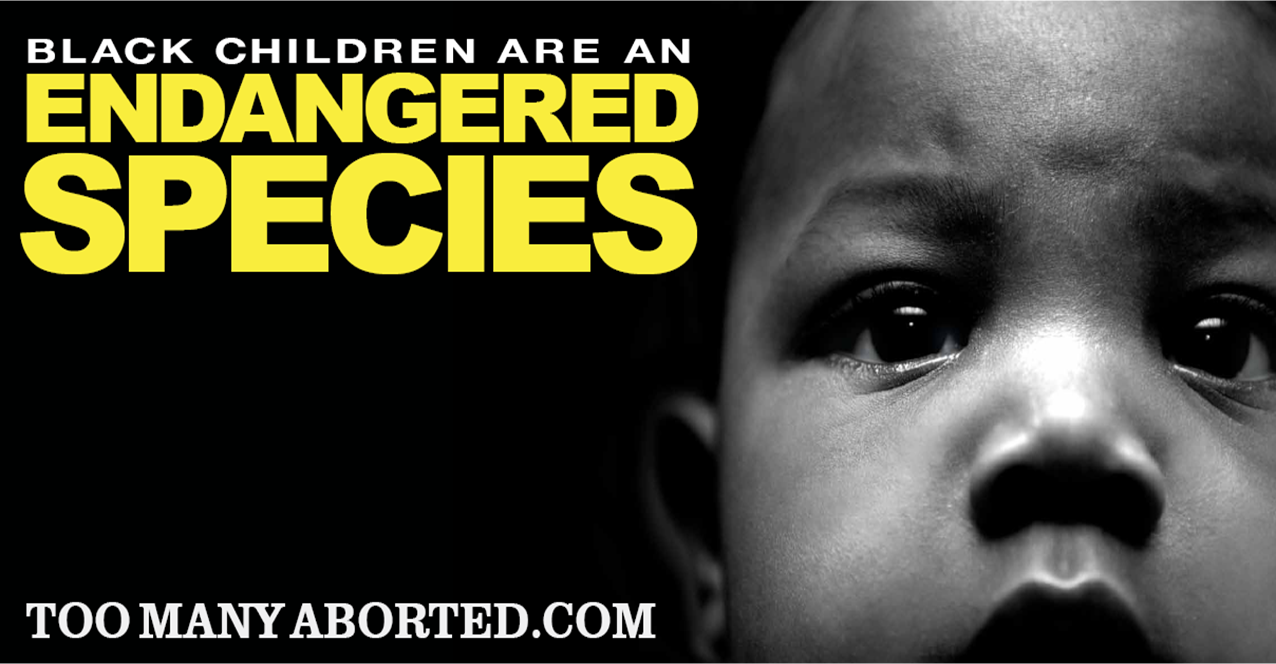
So here’s the deal. As I regularly troll the internets for stories about black children and black mothering, I came across this op-ed from Dennis Byrne, a columnist at the Chicago Tribune, commenting on the billboards across the country that try to shame black women into not having abortions. Although he is neither black nor a woman (his words), he thought it his (duty? calling?) prerogative to comment on the “high abortion rate among blacks.” Here’s the gist:

Political correctness and ideological dictates discourage discussion of the culture of some black communities as explanative of violence, ignorance, high rates of abortion and other dysfunctions. But for those communities, culture is described by the growth of a matriarchy, as displayed by the many grandmothers raising their daughters’ children. By the absence of men in child rearing. By men who prey on young women who have never learned what to expect from decent, caring and responsible men. By the collapse of the family and the destruction of men’s and women’s traditional, balanced roles in making children strong enough to resist the challenges of today’s broader culture of irresponsibility, casual sex, substance abuse and other plagues.

In this op-ed, Byrne rehashes an old, but reborn, theory: that there is something intrinsic to black “culture,” independent of any outside factors, that accounts for the disproportionate numbers of abortions in black communities.

This makes my blood boil. One, because as a scholar who studies culture, he doesn’t know what he’s talking about.

First: on culture. Byrnes defines culture as “the behaviors and beliefs characteristic of a particular social, ethnic or age group.” Um, not quite, homie. Where do these beliefs and behaviors come from? They don’t just spring forth from the middle of the earth, waiting for people to adopt them. Culture is not “created” nor does not exist in a vacuum. Culture is both responsive to and part of shaping structure; many sociologists, such as myself, explain culture as the opposite side of the coin to social structure. The growth of a matriarchy (which is largely a myth, I believe to demonize black women) and the dearth of men available to actually father their children are events, happenings; they are not culture. Nor did not happen outside of the influences of social structure. Many factors colluded to affect that outcome: collapse of manufacturing industry; subsequent high rates of black male unemployment; mass incarceration; felon disenfranchisement; the crack cocaine epidemic.

Culture reflects options available within a given social structure. Yes, people make choices, and they have agency. But agency is not what we think it is as total free will, ability to choose anything and everything. Culture reflects what one BELIEVES to be their options, what one can do with what one is given. So black “culture” can never be defined as one thing, one way of being, one way of behaving. Because we live in a myriad of structural positions, and some of us have options that are not available to others and vice versa. And among the options, some of us choose #1 and others choose #4 and so on.
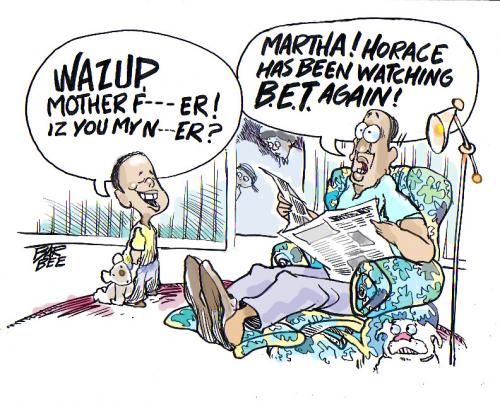
THIS is not all there is to black culture, despite the moniker...

The “collapse” of the family structure is less to do with any possible independent effects of culture than with the structural effects of class. As I’ve discussed here before, a class structure that allowed for families of any configuration to make a decent living would have more time for child rearing. A school system that did not grossly and blatantly favor wealthier children over less wealthy children would be one in which all women could be educated enough to take care of themselves, and not fall “prey” to vicious and violent men.

If you want to change how people behave, you need to change their options. You need to change what is available to them. You need to change their structural reality.

And two, if the pro-choice side is the “right” side, why should we care about disproportionality?

Making arguments about cultures connection to disproportionality makes clear that true intentions are to get rid of the option to abort altogether. For if you are pro-choice, do you even care about disproportionality? Or rather, should you? If you believe that anytime a woman gets pregnant but for some reason – any reason – does not want to go forward with that pregnancy, she should have the right to choose to end the pregnancy, then every abortion should look the same to you. Regardless of the race of the woman. Disproportionality then appears to be that black women are having more unwanted or mistimed pregnancies, but are also using this option, the option to terminate, more than other women.

This can be interpreted multiple ways, but I’ll offer two that I find the most liberating. First is that black women are more aware of their reproductive rights, are more in tune with what they do and do not want, and are more willing to choose to abort. If you are pro-choice, this doesn’t seem to be a problem – black women are, in not the best language, taking advantage of exactly the right Roe v. Wade stood for – the right to make a decision about your body without anyone else second-guessing you or interfering. Calling these numbers a problem feeds into the idea that black women are not capable, or are somehow ignorant (or culturally deficient), of making this decision for themselves.

Second, this can be interpreted as other women – white, Latino, Asian – are not as gender liberated as black women. Bryne in the article above – as do many men – lament the “matriarchy” in the black community as a disruption of “balanced” gender roles. Who said gender roles had to be balanced? Instead of considering that black women are having too many abortions, maybe women of other races are having too few. In other words, women of other races are less willing to have abortions when they actually would choose to under different structural circumstances. Again, with culture as the flip side of structure, women of other races may feel as though their options (culture) are limited, despite Roe v. Wade, given their structural position.

This is not to say that black women do not experience and live under patriarchy. They absolutely do. But the facts are that black women are less likely to marry than other groups. Not being legally bound to your oppressor is sure to make a difference.

Spoken from a sociologist who studies culture: If you want black women to stop having abortions, if that is your true goal, you need to change their world. You need to make it so that there are no reasons for why a pregnancy would be unwanted or mistimed.

A billboard does not change the world. It just pisses people off.

on baldy-heads and aliens

“Did Big A get a haircut?”

I look over at my precious boy, fresh from the barbershop. His experience with getting a haircut so different at five than it was at three, when her would scream the entire time. Once, there was an entire patch of hair, the size of a quarter that just wasn’t cut cause the barber couldn’t take it anymore! But now, he loves getting his hair cut. It tickles around the ears, he tells me, but getting a haircut is no big deal. And getting to go to McDonald’s afterwards…well, that makes up for any unpleasantness.

So when a preschool “friend,” and I use the term begrudgingly, asked me this afternoon whether Big A had gotten a haircut yesterday, I happily said, “Why yes he did! And doesn’t it look lovely?” Because, of course, I think it does. I love the way the close cut makes little black boys look all grown up by allowing you to focus on their faces. I love how I can really stare into my angel’s eyes, with his long eyelashes and deep brown irises that really seem to look into his gentle soul.

But apparently, I’m alone in this appraisal. For this little girl said, “No. He has no hair. He looks like an alien.”

I was shocked. Taken aback. Then outraged. Angry.

For it dawned on me that this was not the first time some child had said something disparaging about Big A and his haircuts. I remembered him telling me how the kids at the other school called him “baldy-head” whenever he got a haircut, and how they were not saying it in a nice way. I remember him telling me that it hurt his feelings when they said that. I remember him telling me that he was never going to get a haircut again.

As I thought about this, I looked around the playground. As much as we lament what little black girls go through with regards to their hair, I never thought about the fact that little black boys face their own hair issue when surrounded by boys who are not black like them. As the only black boy on the playground, Big A was also the boy who has the least amount of hair. In relation to all the other children, even the boys, he WAS bald. All of the other little boys had a significant amount of hair on their heads – hair that flopped in bangs on their forehead, around their ears, on the nape of their necks. Some boys had more closely cropped hair, but enough to run a little gel in it and make it stand up or lay down. Certainly not bald. And, as we all know, kids DO have funny-shaped heads. When all the hair is removed, things can look a bit…well…strange.

Of course, though, to me, I didn’t see it the way this little girl did. All my life I’ve seen black men get haircuts, from high top fades to taking it all off. It’s normal to me to see men and boys with hair of all different lengths, from locs like my father’s to the floppiness of these little boys to the boxes that were popular in the 90s to Big A’s curly Qs when he was a baby to the close cut he gets today. I’ve seen it all, so none of it shocks me.

But these kids, raised in elite suburbia, have not. They don’t live around people who are different than them who do other things with their hair. So a little black boy with a close cut is a novelty to them. And when something is strange, they ridicule and “otherize” it.

Even when it is as beautiful as this.

Hey Michigan: These Are Children

Are you: Homeless? An ex-con? Pregnant? A single mother? BLACK? POOR? In foster care? Well, then watch out – you are a prime target for being denigrated, disrespected, and dehumanized in Michigan.

Not only are homeless women being arrested and charged with larceny for enrolling their children in the wrong school district in Connecticut, but several states away in Michigan, single, pregnant, and Black teen moms have been arrested in Detroit for staging a sit-in in their school to protest the fact that it will be shut down at the end of the school year.

Sarah Ferguson Academy is one of the only schools in the country that educates pregnant teens and teen moms. This schools raises its own money through its agriculture program – a farm, in the middle of Detroit. 90% of its students go to college – any college, somewhere, anywhere, and get money to go there. This school makes sure that these children – because they are still children – are getting an education, learning how to be parents, making a better life for themselves and their kids.

But now that Michigan state has taken over Detroit – yes, they’ve taken over the entire city – a “dictator” has decided to close a bunch of schools, including this one, unless a charter organization agrees to take it on. And the charter can do with it whatever it wants, which means either way, this school will probably close. But these girls value their education SO MUCH that over Spring Break they organized a sit-in, and occupied their school to protest the dictator’s decision.

And what does the state do? Arrest them. (Please watch the video here. Watch the police officers manhandle pregnant teens and turn on their sirens to drown out their shouts.)

***

It’s not only in the schools. A state senator, in order to save money, recently introduced a proposal to restrict foster children in their apparel choices. For their clothing allowances, which nationally are only about $200 a YEAR, Sen. Bruce Casswell would propose that this money could only be spent in thrift stores.

Yes, you read that correctly. Foster children would only be allowed to purchase used clothing. Apparently since this Senator never had anything new as a child, neither should children who are not living with their biological parents and are in a limbo state of extremely stressful uncertainty.

[pause]

Update: After the story went viral, the good Senator amended the proposal to say that the children could buy new clothes, but wanted to make sure the gift cards they received would only be used for clothing and shoes. Because of course, foster kids can’t be trusted to only by clothes. They might spend it on candy and soda.

I’m sorry, but Michigan is coming off like a state that hates children. Poor and/or black children to be specific. And it pisses me off. What about you?

What you can do:

Donate to cover the girls’ legal fees

Contact the good senator

if this ain’t class warfare

(originally posted at gradmommy)

“If this is not class warfare, I don’t know what is.” – The Seeker

“Here we go again.” – The Thinker

These are the words of friends of mine as they express shock over the second case in only a matter of months in which a black mother has made national headlines for pursuing a better education for her children than they otherwise would have received.

In the most recent case, Tonya McDowell, a black mother who lived sometimes in a homeless shelter, sometimes on a friend’s couch, used her babysitter’s address, where she did not live, to enroll her children in a Connecticut school. When the school found out, they had McDowell arrested, and charged with stealing over $15,000 in educational funds. In the previous case, Kelli Williams-Bolar, after refusing to remove her children from the Ohio school district in which her father lived, was arrested, charged, and spent 9 days in jail. She is now on probation for 2 years and must complete 80 hours of community service.

For the second time this year, a black mother has been arrested and charged with larceny – stealing education, defined in the simplest of terms as taking something that not only doesn’t belong to you, but rightfully belongs to someone else. For the second time, PUBLIC education has been defined as a proprietary right that only belongs to some children and not to others. For the second time, the law has allowed municipalities to decide what “public” is deserving, and what “public” is not. For the second time, the public-private distinction has absolutely dissolved.

I’ve heard a lot of arguments from folks about why what both of these women did was wrong. Most of these arguments have come from relatively well-to-do folks, who buy homes at high prices, and live in relatively high performing school districts. For them, education is proprietary, because it is paid for our of their (high) property taxes. Furthermore, they pay extra money, on a voluntary basis, to an education non-profit that supplements the property tax funding. That’s how their schools can afford art and music teachers, fully-stocked libraries, and full-time librarians.

But what is most important to these parents, and why they are so against “others” coming in and enrolling their children when they don’t live in the district, is due to scarcity. In the district where I live, children cannot always go to their neighborhood school because the reputation of how good the school district keeps the population of school-aged children growing, meaning the number of kids is growing but the number of schools is not. Parents here sometimes have siblings in schools across town from each other because one child one year had to be overflowed because there was no room in the neighborhood kindergarten class. Parents argue that they moved to these toney suburbs precisely for the schools; they pay high property taxes and contribute to the education fund precisely because they expect to get into the school and receive a top notch education. There is a sense that there is hardly enough to go around for the people who actually live here.

For these parents, while it is public education in name, they fully believe they are paying for it, in a very real sense. These parents argue that they could have lived elsewhere, could have bought a cheaper home, could have lived somewhere where there was less scarcity. But they didn’t. They chose to live here, and in some cases, sacrificed to do so. When “others,” who are not contributing to property taxes, or the education fund, come in and take a spot, in a very real sense it feels like stealing. It feels like these “others” are taking money that simply and clearly does not belong to them.

For a long time, I could not understand where these parents were coming from. It sounded like pure and simple selfishness to me. And the fact is, it is selfishness. But it’s not their fault. They are just playing the game.

We live in a society that has totally abandoned the goals of public education. Rather than the goal of creating a educated citizenry because that is what is best for a participatory democracy, education has been turned into an individualistic pursuit. Today, we speak of education as something a person has to get if they want to be anything in this world, rather than as something our nation needs to foster if we want to sustain our way of life. When the founders wrote the Constitution, while they wrote of the importance of “life, liberty, and property” they should have also wrote about the federal interests in education.

Because now, public education is no longer truly public. If public is taken to mean as “for the common good,” which public schools once were, they no longer are. Common schools were designed to educate all children, to make all children productive citizens, to foster a sense of nationalism, to develop “Americans.” But now, in our national lingo, public means “charity,” or simply, “free,” giving a sense that it’s only for those who cannot afford it. So when we think of “public education,” we think of what we have to provide to those who cannot afford “education,” and usually what we give those who cannot afford a basic provision of life – food, clothing, shelter – is a run-down form of what everyone else gets.

These two mothers – Tonya McDowell and Kelley Williams-Bolar – are on the front lines of class warfare, attempting to reclaim the commonsense definition of what it means to have public education. Public education is not just free, but it is an education that is dedicated to educating for the public, common, good. It is an education that recognizes that if some of us are uneducated, that is bad for all of us. It is an education that recognizes that equity cannot be ignored. It is an education worth going to jail for.

no more monkeys

It started out innocently enough. But when they started reading Caps For Sale: A Tale of a Peddler, Some Monkeys and Their Monkey Business, my heart started to beat a little faster. A little boy was called up to be a “helper;” he played the part of the peddler. The peddler stacks felt pieces on his head: checkered, then gray, brown, blue, and finally red. He walks through town, and getting tired, stops to rest under a tree. He takes a nice long nap, only to awake and find only his checkered cap remains.

The children sitting on the circletime rug are spellbound. Stories being acted out are treats; usually the teacher is simply holding up a tiny little book that most of the kids cannot even see the pictures of. My two little ones are right in the middle; buttery brown faces waiting for the ball to drop – what happened to those caps?? My five year old calls out, for he’s heard the book before, “The monkey’s took them!,” a wide grin on his face.

The teacher assisting the reading teacher whispers, “Let’s give the kids the caps – they can be the monkeys.”

I’m sitting off to the side, taking pictures of this story-play. I stop.

No no no no no no no.

My stomach flops and I feel like my lunch is about to come up. But of course – it’s a story play, and all the parts have to be there. If the kids – including my kids – were not going to be the monkeys, who were?

The reading teacher says, “No, I don’t have enough for all of them.” I exhale. “But they can all just act like monkeys in their seats.” My chest constricts again.

When I see my beautiful brown son put his fingertips in his armpits, and flap his elbows to mimic a monkey, I thought I would lose my breakfast. All the other teachers and parents in the room were giddy – their faces lit up, laughing, joyous – while all I could do is stare, steely eyed, trying my damnedest not to yank my children from their seats and rush out the door.

Afterwards, I approached the head teacher and told her that if they were going to read this book again, that under no uncertain terms were my children to be monkeys in from of the class. Even if they choose it themselves? Absolutely not. I walked away from the conversation sure that the teacher had gotten my point, but not quite sure that she understood why.

But I’m sure I was right. This was all the news this weekend:

An email reportedly sent by party central committee member Marilyn Davenport shows an image, posed like a family portrait, of chimpanzee parents and child, with Obama’s face artificially superimposed on the child. Text beneath the photo reads, “Now you know why no birth certificate.”

Her explanation?
“I simply found it amusing regarding the character of Obama and all the questions surrounding his origin of birth,” Davenport wrote, according to the paper’s website. “In no way did I even consider the fact he’s half black when I sent out the email. In fact, the thought never entered my mind until one or two other people tried to make this about race. . .”

Tried to make it about race? Hmm. Right. Blacks have been compared to apes damn since the beginning of time; claiming ignorance about the connection makes one seem stupid, not colorblind. Even the head of the GOP saw the racism for what it was. Even so, read the newspaper online comments and people continue to defend her actions, saying that race had nothing to do with it, and this was simply a joke.

But why THIS joke, why this imagery over and over again? Type in “obama and ape” on google and see how many pictures come up, how many “innocent jokes” are associated with this rhetoric.  How can whites claim that they know nothing of the imagery associated with blacks and apes, chimps, monkeys, etc, yet use it so often to ridicule and dehumanize black folk?

No more monkeys in my house. No more monkeys for my kids.

“Good Mothers Don’t Murder Their Kids”

Another tragic case of a mother drowning her children, and herself, come out of New Jersey this week. A young black mother of four drove her minivan, with all four of her children, all under the age of 10, into the Hudson River, allegedly after finding out that her husband was having an affair. Her oldest child, a 10 year old boy, was able to push the button to open the windows and swim out. He says that his mother, before she drove into the river, came to the back of the car and told the young ones that if they were going to die, they were all going to die together. She posted on facebook about her plans, but new reports say that she changed her mind at the last minute and tried to reverse the car. The boy told his mother he was going to get help, and the last her heard from her was “Ok.”

While the case is most certainly a tragedy, much of the discussion surrounding the case has been exactly who the case is a tragedy for. It’s obviously a tragedy for the children, both the three that died and the one that survived. Those three lives lost are three young black lives that will never get the chance to experience living out all that life has to offer. For the child that survived, he will forever suffer the trauma of this event, forever remember his mother and his siblings in this way.

But is this a tragedy for the mother? Reading the comments from the online newspaper, the opinions are mixed, mixed over whether mourning for the mother is even proper. The two poles seem to be either a) “we don’t know what was going through her mind, so let’s reserve judgment” or b) “good mothers don’t murder their kids.” I don’t think either of these are accurate descriptions of the possibilities of what we can say about the circumstance of this mother.

Both statements imply that we can pass judgment, not simply in the legal sense, but in the moral sense. Legally, of course, we could pass judgment. There are legal standards for murder, standards by which we ascertain intent to kill, processes and procedures to ensure fair trials. But moral judgments? Those are based on all sorts of things, little of which do we agree on.

If she was having a psychotic break, and that was “what was going through her mind” is that a tragedy for her? For some folks, a mental illness would automatically disqualify her from “good mom” status, for people with mental illness should not have children. For other folk, “snapping” is akin to insanity, meaning she had little control over her own actions.

We all “snap” from time to time, not to the point of killing our children, of course, but to the point of losing control for  split second and doing something that you wouldn’t otherwise do. Yet we don’t base the entirety of our character on those one occurrences, those one situations. We recognize them for what they are – lapses in judgment, bad decisions, sometimes truly fvcked-up decisions – but we don’t allow them to contaminate all of who we are.

Even when someone does something as horrible as this, I can’t bring myself to allow it to contaminate everything they are. And maybe it’s because I’ve been in that place, about to make a decision that was permanent and unalterable about taking my own life. And thankfully, I did have my wits about me to not contemplate taking my children with me, but to take my own life was still an obviously reckless and misguided and wrong and bad decision. And had I taken it, or attempted it (I got help before I took that step) I would hope that that moment did not subsume all there is to me. That that moment of weakness, of dispair, of truly being out of my mind did not become all that folks would remember about me. Even now, after being hospitalized and diagnosed, I hope that *it* is not all that people think when they think of me, that one bad thing I was going to do.

And so in this case, I wonder *why* people feel the need to pass a judgment at all. Why can’t we all just shake our heads at the sadness of the entire situation – four lives lost, lives that will not lived any longer, lives that were cut shorter than they should have been. Why can’t we mourn for them – all of them, the children, babies really, only 5, 2, and 11 months, and this young mother – as somebody’s child, somebody’s grandbaby, somebody’s niece, nephew, somebody’s loved one who is now gone. And why are we not more focused on what all the negative characterizations of this mother will have on the child who survived – a child that will forever live with the horrible trauma of his mother’s and sibling’s death?

Please: can our compassion for that child be greater than our need to judge the actions of the dead?

Is it (Attempted) Murder?

A mother was recently convicted of attempted murder for withholding cancer medication from her child, a child who subsequently died when his cancer returned after a period of remission. The mother admitted to withholding the medication, but defended herself by claiming that she did so because she thought the side effects of the medication were too harsh:

LaBrie said she told her son’s doctor two or three times that she was afraid that “he just had had it.”

“He was just not capable of getting through any more chemotherapy,” LaBrie said. “I really felt that it could out-villainize the disease — the medicine could — because he was very, very fragile.”

The little boy, only 7-8 years old at the time, was also severely autistic, and his mother was caring for him alone. She and the father had a contentious relationship, although after the child’s doctors found out that the child hadn’t been receiving the cancer treatments, the boy went to live with his father. The mother was suffering from depression at the time she chose to withhold the medication, but the doctors testified that they told her that her son had an 85-90% chance of surviving the cancer if she stuck to the medication plan. It was after it was discovered that the mother deviated from the plan that the doctors discovered that the cancer returned, and a year later the child was dead. (The father died in a car accident several months after the boy’s death.)

Murder is not a term to throw around lightly, and in fact, the law does not. Murder requires the intent to cause death, or at least to cause grievous bodily harm. Intent cannot be inferred from the results of one’s actions; in other words, just because someone dies, or is grievously harmed does not allow an inference that the person who caused such harm intended for it to happen. To charge murder, the prosecution has to show that regardless of outcome, the accused intended, through their conduct, to cause death.

This is an attempted murder charge, which simply means that the accused must intend to commit murder, which is already a crime of intent. So the accused must intend to intend to cause death – they must intend to do whatever will cause death and they must intend to actually accomplish the act, i.e., cause death. One cannot attempt murder unconsciously or involuntarily. Courts use many different tests to determine how far the accused has to go to actually attempt a crime, but in Massachusetts (where this case is from), the accused must take a substantial step and come “reasonably close” to executing the crime through an overt act. An overt act is the point of no return – “an overt act must be of the type that a reasonable person would expect to set off the events that would naturally result in accomplishing the crime but for an unforeseen interference.” Attempted murder is simply murder that was unsuccessful in actually producing death.

In this case, to convict this mother of attempted murder – and not just murder – the jury had to believe that this mother intended, through withholding the medications, for her child to die, but her conduct – withholding the medication – did not actually cause the child to die.

Am I the only one who sees a problem in this?

The doctors testified that there were five phases of treatment, and if all five phases were completed, the child had an 85-90% chance of survival. The mother testified that she followed through four of the phases to completion, but withheld only the fifth phase. When the doctors reexamined the child, that’s when they noticed the cancer had returned in a more aggressive form.

First, where is the intent to kill? Nothing in this article, at least, indicates that this mother intended to kill her child, or that she knew that in withholding the medication that death was certain to occur.

Second, and closely related, there was no guarantee that if the child completed the treatment completely, meaning all five phases, that he would survive. So no reasonable person would expect that not finishing all the phases would certainly lead to death. There was no overt act that creates the attempt to commit murder.

Third, the child died from cancer, but not the original type of cancer he once had. The fact that the child eventually died is really not relevant, but I’m sure that the prosecutor used the fact that the boy died to their advantage. They couldn’t charge her with murder because there is no way to prove that her withholding the drugs is what led to the cancer coming back and ultimately the child’s death. But ironically, if her conduct was attempted murder, then what stopped the attempt from being full-out murder? What stopped her conduct from producing the result that she intended? Again, its clear that there was no guarantee that the child would have survived had she given him the drugs, and no guarantee he would have died from withholding. Why did the jury find beyond a reasonable doubt that this woman intended for her child to die when no reasonable person would believe that death would be his outcome, and the prosecutor could not even charge murder because the causal chain is too tenuous?

We put a lot of pressure on moms to be superheroes. We expect them to make all the right choices, the choices we say we would have made. We chide them, punish them when they make a choice that turns out to be the wrong one, one that we think they should have chosen differently on. We expect mothers to be martyrs, and saints. We call them murderers when perhaps they were choosing compassion.We constantly second guess what they do, never really stopping to put ourselves in their shoes.

I hope this mother and her lawyer passionately pursue an appeal. While she is probably guilt-ridden, I don’t think she is guilty.

Media Monday

Council on Contemporary Families Releases “Unconventional Wisdom” on Family Diversity

One of the most unconventional findings was that “the darker an African American or Latino student rated his own skin tone, the higher his academic performance, academic confidence, and social acceptance.” This relates directly to the discussion we were just having about colorism, and whether what the teenagers in the video were saying accurately reflected what they thought about skin color and beauty. I’m tempted to want to spin these results to so that they can co-exist with the teenagers reflections being accurate, but I can also see how these can represent conflicting findings.


Minority Children Four Times More Likely to Start Poor, Stay Poor

“In Singapore, the government deposits small amounts of money into an account for each child born, Shanks said. That money can be withdrawn to cover costs such as extra tutoring for children or higher education for young adults. Or it can sit, earn interest and become the sort of nest egg or emergency fund the child’s future family may need. As a result, almost all families in Singapore–regardless of income–own their own homes.”

Yet in this country we act as if people with assets – homes, stocks, etc. – aren’t doing the same thing for their children and grandchildren. When you start life off with a nest egg, even a modest one, the monetary laws of compound interest make it so that the money grows, without you doing a single solitary thing to earn it – no bootstrapping necessary. But for poor black children? We act like their situation actually has something to do with their or their parents’ character, not with historical, systematic denial of the opportunity to build wealth according to race.

“Right now, 12 percent of white children live in poverty compared to 33 percent of Latino kids and 36 percent of black children.” And you think we live in a post-racial world?


Racial Politics: The “Business” of Domestic Private Adoption

On a related note, over at LIE there is an article about money and black babies and adoption. Black babies usually “cost less” in private adoptions because there are more of them than white babies and they are harder to place than white babies. They are harder to place because there are more white adoptive parents than black adoptive parents, and the norm is to match babies within the race. I say this is related to the post above because, as one commenter says, perhaps much of why there are more black babies is due to the poverty that many black mothers find themselves in when it is time to give birth. In any case, transracial adoption is on the rise, for even at “rates” as low as $4,000 for a black baby, compared to nearly $40,000 for a white baby, getting a black baby is a deal. White adoptive parents come to “prefer” a black baby once they realize how much better the black baby fits into their budget. But its a secondary consideration; the White adoptive parents “settle” for the black baby, only after having taken the price of the child into account. Fucked up, right?

peep this: in case you thought we were post-racial

There really isn’t much to say, as the video speaks for itself. Colorism in the black community is as much a symptom of racism as is white privilege; both stem from a belief that the whiter, the better. While we can applaud that more black faces are being heralded as beautiful, the truth is that lighter skinned black women with longer, less nappy hair is considered to be more beautiful than darker-skinned black women with shorter and nappier hair.

If you don’t believe me, watch the video again.

The question becomes: what do we do about it? Do light-skinned black folks have some affirmative duty, like we call on white folks, to call attention to their privilege in order to denounce it? I don’t know if I “qualify” as light-skinned (that sounds so ridiculous); at various points in my life people have said yes, and others have said no. But I’ve experienced some of what these kids are talking about in the video. I remember a boy saying that he liked my knees because they weren’t dark!

Whatever my classification, I’m pretty sure, according to my sources, that my children are considered light-skinned. And they have less nappy hair (although you wouldn’t know if the way they carry on.) And I already see the privilege that is conferred on them because of it. I’ve heard the comments about their “good grade of hair” and how “beautiful” they are; I don’t remember anyone saying I was beautiful as a child. And while I can’t really stop what other people say, I’m trying hard to make sure they don’t internalize the messages; I try to have every shade of black represented in their books and toys, and talk about how gorgeous all the colors of black are. Both of their grandfathers are darker-skinned, but it doesn’t help that we aren’t particularly close to those sides of the family.

Yet on the other hand, I want to be able to tell my daughter that she’s beautiful. I want to be able to do her hair in her ponytails and say, Little A, your hair is so pretty. I hope that she understands that I am making an individual judgment about her, and that my hair being loc’d reinforces that black hair in its many configurations can be beautiful. But I also don’t want her to grow up with a complex about the whole light-skinned thing either, just like I’m sure white folks don’t want their kids to grow up with a complex about being white.

Ya feel me?

Mama Media Monday

There is a lot going on with cocoa mamas in the news every week, so I’ve decided to set aside Mondays to talk about a few of them. Here’s what’s up this week:

Many Moms Have Kids With Different Dads, U.S. Study Finds

Apparently over a quarter of all women who have two or more children have these children with two or more men. For black women, this rate is 59%. And, according to the article, the trend is across demographics of income, education and marital status – even married women who work and are not poor have more than one father for their children. But what irks me about this title, and the rest of the article, is how mother-centric it is. It does take two people to make a child, does it? I mean, if this is true for women, mustn’t the same be true for men? Why isn’t the title “Many Parents Have Kids With Different Partners”?

Almena Lomax dies at 95; civil rights activist launched Los Angeles Tribune newspaper

I’d never heard of Almean Lomax, and I think that’s a damn shame. This trailblazer was a journalist unlike any other, who is notable not just because she started a black newspaper of incredible importance to black folks in the 1940’s and 1950’s, but because she was unafraid to do what others would not.

“She was a terrific writer…the only one of all the black newspapers at the time who really was fearless about exposing things as they were. She didn’t soft-pedal anything,” said veteran civil rights lawyer Leo Branton Jr.

Not only was she fearless in her writing, she was fearless in her life. After her divorce in 1959, she moved her SIX kids – ages 4 – 16 – from L.A. to the deep South so she could cover the height of the Civil Rights Movement from the ground, much like war reporters do now. According to the article and her children she regretted it later, because of the trauma that such racism left on her kids. But I admire her willingness to get in the trenches, so to speak. Often I wonder about the impact we can make from the outside looking in. While we want to protect OUR children, are we losing something – being selfish even – by not being in physical solidarity with the most oppressed among us? Or is our selfishness justified, as long as we use our outsider status to the utmost in service of those in the war? What does that utmost look like?

What’s Really Behind Black Child-Abuse Stats

A new study debunks the long-held belief that racial bias by those who report abuse is behind the disproportionately high numbers for black children.

I don’t read The Root on a regular basis, and this article* is an example of why. The article is about a report that  supposedly debunks a myth that racial disproportionality in child abuse statistics are largely driven by racism or racial bias. The report is supposed to say that instead black parents are disproportionately more likely to be cited for child abuse because black parents are more likely to be poor.

But the problem with this Root article is that it never tells you how the report debunks the myth. How did the researchers get from “there is no racial bias in how professionals judge was is/is not abuse” to “it’s all about poverty”? The article gives me no reason to believe the report, except that the Root says that the report debunks the myth. Isn’t the point of the news to digest the information for me, so I don’t have to read the report? The Root has this kind of shoddy “reporting” and writing consistently; I really cannot understand why black folk continue to read it or take any stock in what they have to say. I understand that media outlets for black news are few and far between, but we have to be able to do better than this.

Do you all have any news about black mothering or black childrearing to share? Send it to me or post it in the comments!

Have a great week,

LaToya

*I actually have a lot to say about the report itself, but I’m going to save it for another post, later this week.