
LNWA (Little Negroes With Attitude)

I coulda choked a child this week. Sike, y’all know I’m just playin’. But for real, my five-year-old could of really made me catch a case this past week. It seemed like all the patience I’ve ever had to muster I mustered this week.

How could this sweet face, the face of the baby boy who made me a mama, suddenly start talking to me like he’s the massa and I live in the slave quarters down the road?

Him: :: opens the refrigerator ::

Me: “Boy, you better close my refridgerator.”

Him: “But I’m hungry. And you need to make me something to eat.”

Me :: staring, trying to figure out where this little monster came from ::

Him, staring me dead in my eyes like he’s as tall as me: “And anyway, it doesn’t belong to just you. We all live here.”

:: You know, in all fairness, I agree with him. We all do live here, and I believe in sharing. But it was the way he said it. Hands on hips, little neck shake, eyes all wide,  like he was doin’ somethin’. Did this little nucka just put forth an argument, I mean really tell ME that he can open the fridge when he feels like it? Oh Hell Naw! ::

Me: “Like hell it don’t. Do you pay any bills? Do you have any money? :rant really begins: Do you know what electricity is? Every time you open that refrigerator, you are using electricity. And that costs money. :voice really raises: Do you have any money? huh? I can’t hear you?  If you don’t pay any bills, then it doesn’t belong to you! And anyway, I’ve told you about talking to me like that!  Look at me, boy! Don’t tell me I have to cook you something to eat! I cook for you because I love you! Ask for what you want, but YOU don’t tell ME anything! I don’t HAVE to do anything but be black and die!”

As you can see, the attitude this child displays annoys me to the core, making me take the conversation way off base, and probably not addressing the actual issue. It would be a lie of me to say that I don’t know where they are getting this behavior from. I truly believe its the influence of the bad-ass kids they are around all day. I see how these other children at nursery school treat their parents, and I get embarrased for the adults. It reminds me of Bernie Mac (RIP) and his act about punk-ass parents. These parents who negotiate with their kids as the kids are hitting them, speaking in a soft, soothing voice as the kid is steadily yelling and hollering, chasing a child who is running around a store. I suppose I should be happy that my children have the God-given (and wooden-spoon enforced) sense not to act out that way in public. I’ve even had parents come up to me asking how do I get my kids to behave. I guess we go through these episodes at home just so they can get it out of their systems so they won’t act like monsters when we are out in the world.

But still: if I hear “I want” or “I told you” or “Get me some” or “I don’t want to” another time, y’all might have to come get me. Especially for my 5-year-old. It’s one thing when your child is practically cussing you out in 3-year-old babyish talk. But this nice-diction-full-sentences-ish….SMH.
My Youngest Son Is My Boyfriend . . .


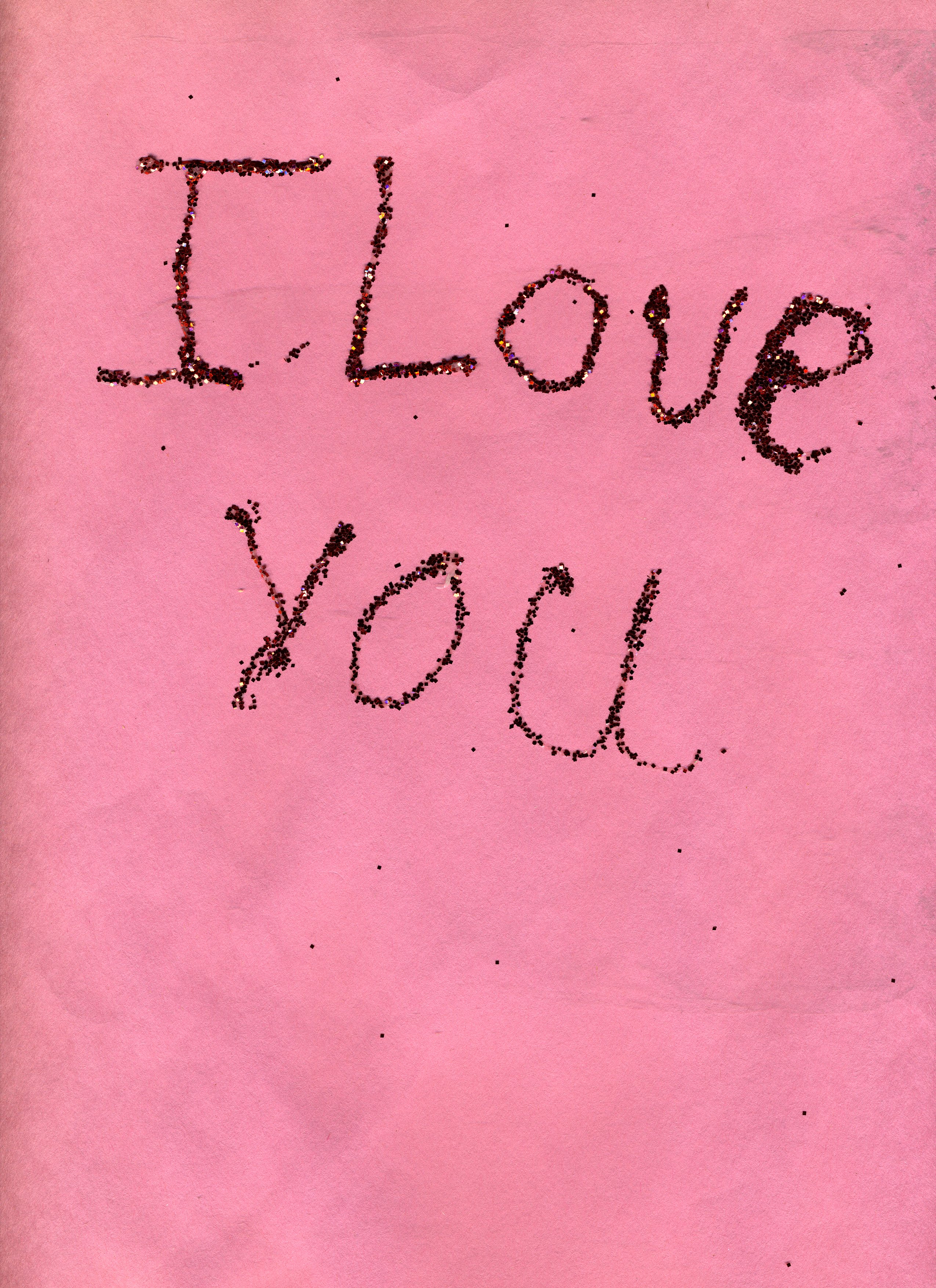
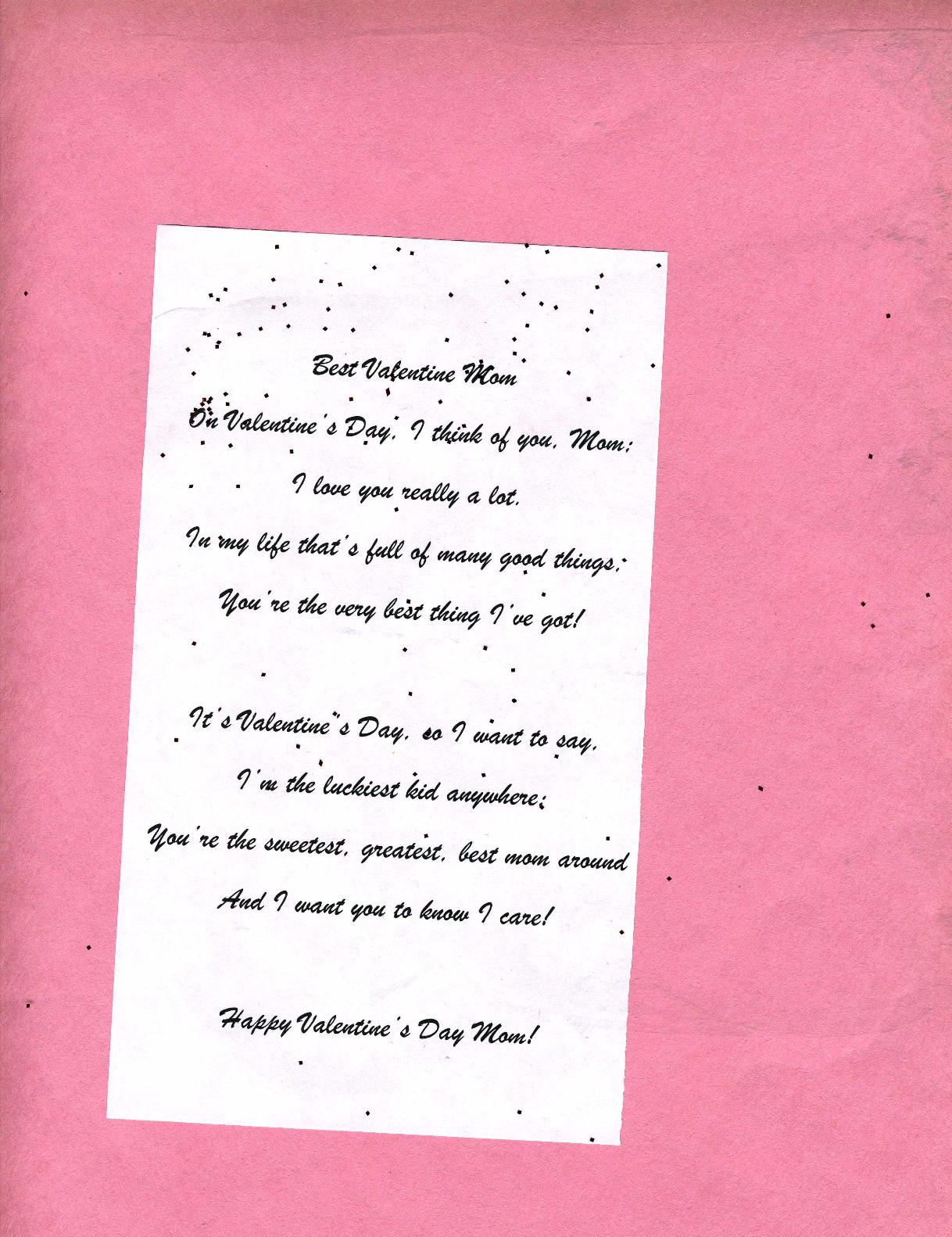
I can just imagine him now, eagerly anticipating my arrival home. As soon as he noticed I was there, talking to the gentleman I thought was my Valentine, he raced to the steps with a big smile and warm greeting. I thought nothing of it at first, after all he is always so attentive, and pleasant hellos are just a part of his normal repertoire. In fact, I should have been shocked that he did not leap into my arms and offer me a great big ‘ol hug. Instead, I remembered that I was still sound asleep when he left out with my husband this morning, and I spent those next few moments wishing him and his brother a “Happy Valentine’s Day.” Locke, my youngest son, replied with a simple request for me to reach “his bag” that was at the top of our bookshelf.

At first I told him no, thinking that he was trying to negotiate some after-hours candy. It was approximately 9:30PM when I arrived home (ON VALENTINE’s DAY), but I had spent all day at work working on a grant that had to be postmarked by today. He insisted and I caved and I grabbed the bag down from the shelf. “HAPPY VALENTINE’S DAY MOM,” he yelled with an extremely proud smile as he dug in the bag and pulled out this card. I swear, at only three years old this kid has a heart that would charm a snake.

I know I’m not allowed to pick favorites and I swear I don’t have one but the differences between him and all the rest of the people in my family are like night and day. If this were my oldest son, my first family member :), he would have taken the disheveled, torn, card out of his bookbag, thrown it in my lap and walked away. If this were my husband, my second family member, he would have handed it to me in silence and waited to give me a gentle (somewhat weak), 🙂 hug. If this were my daughter, the fourth and latest addition,  I have a feeling she would have given me a smug look of diva charisma and concern, like: “I’m sorry, you’re home, and you don’t appear to be holding my present?”

But my boyfriend, Locke, waited in pure delight as I dramatically performed the words of his lovely poem. 🙂 He squeezed me so tight and gave me kisses like he always does. I know I am gushing, but this may be the best Valentine’s Day performance I have ever received. Older men take note from my three year old heartbreaker. He’s going to make a great man for someone someday.

CocoaMamas, what/who made you smile today?

Doll Tests

Dolls have a particular significance in the lives of children. My daughter is just now beginning to form an attachment to her little brown doll, named, rather appropriately by her, “Baby.” She’s started moving Baby’s hand in a “bye-bye” motion, and now insists on putting Baby to sleep at night before going down for sleep herself.

I thought of my daughter and her Baby this week as I showed my students film of what dolls can say about childrens’ perceptions of themselves. The famous doll tests, used by social scientists in Brown v. Board of Education to prove that racial segregation caused self-hate and feelings of inferiority among children of color, have since been replicated. More than 50 years after the case, the results are the same: white children characterize black dolls and black images as bad, mean, and ugly; black children do the same.

And so, it was with intense concern that I scanned the toy boxes and book collections of two pre-schools I visited this week, in anticipation of enrolling my daughter in a morning program. My husband and I have managed without daycare for this long, believing we were the only caregivers certain to value her brown skin, kinky hair, and big brown eyes. But at twenty months old, it is now time for her to socialize more regularly with other children, and to form trusting relationships with other adults.

I searched the toys and books because I knew I could not count on finding other black children at the schools. Although the director of the first school I visited tried to pretend that she really had to think about the answer when I asked “Are there any black children enrolled here?,” she ultimately had to tell me what I already knew from visiting the classrooms: “No, there are no other African-American children enrolled at this time.” The response of the director at the second school was the same, although I did encounter one thing that I did not encounter at the first school: a black baby doll. In fact, it was a white child playing with a black baby doll. And, as I scanned the room further, I noticed pictures of children of color on the walls, and books featuring children of color on the shelves. A close look at the school calendar revealed a Black History Month event scheduled for next week. Noticing my attention to these details, the director of the second school said to me, “It’s important to us that we have more children of color here; in the past, we have gone to black churches in the area and made an enrollment push. We remain committed.”

Just a few minutes ago, I received an email from the 2nd director, notifying me that we had made it off of the waiting list, and were being offered a spot for my daughter in the fall. In the spirit of Brown, she will be a black child attending school with white children. Contrary to the spirit of Brown, she’ll be the only one. And yet, like the social scientists in the landmark case, I’m relying on the significance of that black baby doll and a child’s reaction to it, hoping that this time the doll says something more positive–more hopeful, even–about what the racial climate will be for my little girl at this school.

the personal is political

– on the occasion of attending my first Donna Brazile talk and moments before composing tomorrow’s lecture on Sade

In 1988, at the tender age of 9, I campaigned for Jesse Jackson’s Democratic Nomination. My brothers and I, 11 and 7 themselves, went door-to-door in Perth Amboy, New Jersey registering people to vote, and chiefly, amusing the hell out of them. If pre-pubescent little black kids are not enough to convince you to fulfill your civic duty, I don’t know what will.

My son, twenty years later, voted for Barack Obama on nick.com. I must admit that no matter how special I thought it was when Mekhi declared,  “Mom, don’t you think Barack Obama looks like me!”, in the ’08 season, I still have my reservations about our often conservative first gentleman.


Tonight, Donna Brazile stated that the reason she does not want to run for political office is like the reason why she doesn’t want to be married, because it requires staying in one place. And she likes to be, “on the go!” Though I traditionally do not believe in qualifying oppressions I can’t help but think if I had to choose between working in the white house or working as a house wife, WHICH I, OF COURSE, DO NOT!!!!, give me the suburban soccer mom, every day of the week.

It is so painfully obvious that I am from this country, not only because I am here, with my black family, simultaneously at war and in line with our nation’s political agenda. So many of us, even those not from this country, participate in this American narrative. My children however like to pretend they are from some other place. My oldest in particular has no clue he is “African-American.” I like to blame this on his educational environments and his penchant for White televisual media. In one of his four public schools there was a banner that read, “this is America; everyone reads!,” and in his most recent they celebrated “diversity,” with the book (and participating feast) “Everybody Cooks Rice.” For the latter he brought in rice pudding which I had to convince him was his great-great-grandmother’s dish.

Today, I am feeling particularly angry about not only the post-racial politics of today’s presidential aura, I am also frequently miffed at the government control over our bodies and families. The first time I almost wrote off Barack Obama was following his problematic “Father’s Day” speech in Chicago. Now, with the inability to promote national legislation legalizing gay marriage, the still-inadequate health insurance and the lack of access to safe abortions and contraception, etc., I am wondering where all my Cocoamamas stand. Granted we chose a right to have at least one child. However; I know that does not “safely” box us into right hetero-normative agendas?


Careless Whispers

The sound of her fingertips was staccato on the keyboard and the breathless muttering was barely audible over the tapping
“…stupid…Ugh! Not again!…”
tap tap tap tap tap
“G, you are such an idiot!”

“Excuse me”
She looked up, a little exasperated at the intrusion. her eyes wanted to know why I interrupted but her mouth didn’t move.
“Would you let someone else do that?”
“What?”
“Call you stupid” And I took a sip of coffee, waiting for the answer that I already knew.
She was adamant. “Of course not!”
“Then why is it OK for you to do it?”

And so began my conversation with a co-worker about negative self talk. So often we are unaware of the things that we say to ourselves. She might not have been made aware if I hadn’t listened to her go on and on as we temporarily shared an office.
“I didn’t realize I’d been talking out loud, that was the running commentary in my head…just pointing out my own mistakes, so that I can fix them and improve.”

Many of us would never smoke, knowing the damage it can do to our bodies. We protect ourselves from physical harm and try to make choices that are positive & beneficial…for ourselves and for our children.

Think of negative self talk  as second-hand smoke. We’d never let a co-worker criticize us so blatantly, calling names and making personal judgements. But somehow it’s alright to criticize ourselves and use words that we wouldn’t tolerate from others. Just as second-hand smoke gets into our lungs and weakens them, those cutting words get into our heads and feed doubts and insecurities. The damage may not be as acute as with smoking directly but the lungs are never the same.

#blackparentquotes

I was all set to write something serious tonight, something that would really make us all stop and think. And then something came across my Twitter timeline that had me falling OUT and I just had to share it.

The hashtag was #blackparentquotes.

Sometimes I don’t get Black Twitter hashtags. This one I totally did. I obviously was raised by Black Parents. And I obviously am one. I found myself having heard or having said so many of them, I was simultaneously shocked and amused. Here are mine, that I came up with:

“Get your hands OFF my walls!”

My mother STILL says this. When I was a child, I could NOT understand. I never felt that my hands were dirty. But today – my walls are filthy. Why? CUZ I HAVEN’T TOLD MY KIDS TO KEEP THEIR HANDS OFF THE WALLS! Children have nasty hands. They refuse to use the banister to walk up the steps. As Andrea and I commiserated over Twitter, they act like they can’t stand on their own feet. Why are you leaning?! STAND UP!

[Child says something smart.] “Who you talkin’ to?”

My five-year-old is in this stage now where I say this probably every day. Now, back when I was growing up, this statement was followed by silence, actually waiting for a response. You had betta said, “Nobody,” so the retort would be, “That’s what I thought, cuz I know you wasn’t talkin’ to me like that.” Today, I’ll still say, “Who you talkin’ to?” but I will continue with a talk about being respectful and not talking to me that way. Then I’ll tell him how he should of said what he said. These kids don’t even know…

[Mom on the phone. Child is looking at the mom.] “Why you in my mouth?”

A variant is “Get out of my mouth!” Kids just don’t know how to eavesdrop on phone conversations without actually looking. I learned how to avoid that one quick. I don’t even talk on the phone now. But I do have to shuttle my kids away when I’m trying to have an adult conversation. I get the urge sometimes to say this, but I don’t think they’d get it.

[Mom and child walk into the store.] “Don’t ask for nothin’…”

This was just an ongoing instruction. She didn’t even have to say it.

Child: But [so-and-so’s] mom said they could do it! Mom: “Do I look like [so-and-so’s] mama?”

Nope. You sho’ ’nuff don’t.

“Put some shoes on your feet!”

That was my dad! All the time. I think it was a thing about stepping on something, or catching a cold. But I know it’s the reason  insist on walking barefoot in my house all. the. time. That’s the rebel in me.

“Just wait till we get home.”

I don’t say this. We’ve already had the spanking conversation on this site. Let me just say I have my spoon in the car. No need to wait.

And my favorite (can’t take credit for it though*):

Child: Mommy, can we go to McDonald’s? Mom: You got McDonald’s money?

YES! I say this to my kids ALL THE TIME!! It applies everywhere! “Mommy can we go…” “You got some money?” I try to make it clear to my children at all times that only people who earn money can spend money. They get money sometimes and they have to save some of it and they can spend some of it. But outside of that – naw. It even applies when my son wants to talk about stuff that is “his” – what?? Nope – if you don’t pay any bills in this house, then nothing belongs to you.

What are your favorite #blackparentquotes? Share in the comments!

* i am not a tweet stealer. that ish is not cool.

The Lottery

In the era of education standards and accountability, the debate regarding the potential of charter schools to reform American public education, particularly for children of color, has heated up. Against this backdrop, several films have recently been released about charter schools. In anticipation of a classroom discussion I intend to conduct about one of them, I recently watched the “documentary” The Lottery. In this case, the quotation marks are intentional, because boy, was this one shoddy piece of documentary work.

My critiques of The Lottery are numerous, but I’ll start with data, or the lack thereof. Sackler, the film’s director, did not attempt to provide viewers with any data about charter school performance compared to traditional public schools. But then again, I don’t blame her. If she had, she would have had to admit that the most comprehensive study of charter schools to date found that fewer than 20% of the schools provided its students with better educations than public schools, almost half offered comparable educations, and more than a third offered their students inferior educations. Talk about your inconvenient truths.

But the absence of useful data was just one of many failures in the film, with unfair portrayals of the major players in education reform being the next problem. The Lottery shamelessly demonized teacher’s unions without bothering to interview even one union rep or pro-union advocate in defense of the organizations. This, despite the director’s decision to interview, almost exclusively, pro-charter advocates, some of whom likened unions to thugs and mafiosos. Now, I understand that there are plenty of villains to cast in the education reform debate. Even if, however, the unions are every bit as obstructionist as the movie suggests they are, and are dumping bodies in the river to boot, it is only fair to give them the opportunity to voice their perspective. If the director’s intent was to pin blame for public school failure on teachers, that’s fine, but she then shouldn’t have called her film a documentary. She should have called it propaganda, because that’s what it was.

Moreover, I have to defend the unions a little bit on this one. Anyone with an understanding of labor struggles in this country has to acknowledge that unions can and do play a vital role in protecting workers’ rights. Although it is true that union contracts have often enshrined due process procedures that result in the retention of many sub par teachers, it is not true that due process in itself is inherently problematic. Nor do I buy the argument that because these sorts of procedures are “never tolerated in the private sector,” they should not be tolerated in the public. To the contrary, due process is the name of the game in the public sector, and for good reason. Teaching at a public school is a public job, funded by public dollars, meaning that all qualified citizen are entitled to the job. And if, after having given the job to a citizen the government wants to take that job away, there are procedures that must be followed, for the government does not have the right to arbitrarily take away from citizens that which has been provided for only by citizens’ grace. I agree that some of these procedures have gotten out of hand, and that if we are to take the teaching profession seriously, it has to become easier to dismiss underperforming teachers while rewarding effective ones. But we cannot, and should not, get rid of due process. You want the freedom to engage in both justified and arbitrary firings? Go to the private sector.

While conveniently avoiding relevant data and scapegoating teachers and the unions that protect them, the movie lacks any substantive discussion about the real problems with American public education: segregation; funding disparities; poverty; inadequate health care and food insecurity among students. Instead, the film misleadingly suggests that reform is synonymous with charters. And it does so while exploiting black people to make the point. Prominently featured in the film is the contentious battle between a Harlem charter school that petitions to be housed in a soon-to-be-closed-down failing public school, and the black and brown parents who protest the charter school’s petition. Between participant interviews and clips from the heated public hearings on the issue, you walk away with the impression that parents of color are ignorantly opposing the very movement that is going to save their children. Missing from the film is any legitimate analysis of why these parents are so oppositional or what it feels like for a community to have their neighborhood school closed without education alternatives for their kids; most of these parents, after all, will not be able to obtain a spot for their sons and daughters in the new charter school. She never considers what it does to a community when a center in that community–a public school–is shut down. Needless to say, I didn’t appreciate the way in which Sackler’s portrayal legitimated the cultural deficit model that is regularly foisted on black people in this country.

And as if that weren’t enough, I was disgusted by the film’s presentation of the actual lottery. As has become all the rage, many oversubscribed charter schools hold public lotteries, at which anxious parents and their children gather in an auditorium to learn whether their child has won a coveted spot at the school. The parents of students’ whose names are called jump up triumphantly, running to the front of the auditorium, ushering their children towards clapping teachers and administrators who welcome the child to the school. The parents of students’ whose names are not called sit in the chairs despondently, ultimately heading home, clearly defeated by their bad luck. It is heartbreaking to see the looks on parents faces who had pinned their hopes on wining a spot, and the sad faces of their children who realize that their parents’ devastation has something to do with their limited opportunities. These schools say that they hold these lotteries to illustrate demand in poor communities for their services. I say they are exploiting the hopes and dreams of these families, and their beautiful black and brown babies, for a cheap publicity stunt, and that The Lottery was complicit in that exploitation. Not surprisingly, only 1 of the 4 families portrayed in the film won admission to the featured charter school.

In defense of the movie, some say that it at least “started a conversation,” but I don’t think the movie did anything positive to further an honest and realistic dialogue about public school reform in our country. Most people who saw the film are not like me or the other writers on this blog who are knowledgeable about public school education. Most viewers don’t realize that crucial data is missing. They don’t understand why parents in the film opposed the arrival of one small charter school in exchange for the closing of their neighborhood school. Most people sat down with a box of popcorn, were entertained by the drama which unfolded on the screen, and walked away with a skewed understanding of charters as the answer, unions as the devil, and black people as backwards for fighting the closing of their neighborhood school.

When discussing the film with one friend who happens to be an educator, she used the theory of “structural functionalism” to discuss what is happening with public education: poverty and marginalization of many exists to ensure wealth and access for the few. As a person with a B.A. in sociology, I agree that the theory is relevant here. And yet, social science terms can problematically make societal issues seem academic, objective and neutral, numbing us to the real injustice that is operating in the background. I’ve got a better way to sum up what was going on in that “documentary,” the charter school movement, and in American public education in general: this is some racist and classist $hit.

failure to launch

While media has recently been inundated with narratives of successful, educated, professional black women who are unmarried/unpartnered, I feel like I have experienced some what of a “witnessing” of this reality vicariously through many of my close friends. These are women whom I have always admired, and in some rare instances even resented. They have “the life;” no familial burdens/responsibilities, better salaries, freedom to travel and move about the planet, etc. I have come to adopt a courteous silence about this however.

Last night my very good friend told me that she had cut it off with her boyfriend. I was saddened for her. I knew full well that she was dreading the prospect of starting over and I honestly thought that the ex was a great guy. I think she does too; their timing is just “off.”

When this is a white situational comedy or Hollywood Blockbuster it is easy to shrug this off. It seems white women negotiate enough privilege in life where I honestly don’t “feel bad,” when they are thirty plus and living as bachelorettes. I also think I’m progressive enough not to want to force-feed a hetero-normative mandate onto any one of my single sisters. I do however see clear limits to my feminism, and their’s, at junctures where the nuclear fantasy is not quite panning out for them. They want IT “ALL” and so I want it for them, by extension.

I’m wondering what all our CocoaMamas think about the concept of “failure to launch?” While it is meant to describe bachelor males who are stuck in an infantile state of promiscuity, commitment “issues,” and self-endulgence, I can’t help thinking in this instance that it’s all my single girls that are unwed and all of my husband’s friends are either married or in committed relationships. Are my hot, single, fit, educated, professional black girlfriends failing to launch???

The Reluctant Co-Parents

When my ex and I divorced, one thing we spent no time at all discussing was custody and visitation.

The divorce judgment included a supervision order.  He wanted no part of supervised visitation.  So he vanished.

For the better part of three years, we heard little from and saw nothing of my ex.  I was ok with that.  I put my big girl “S” on my chest and handled my business like the Supermom I figured I had to be.  I juggled publishing parties, parent-teacher conferences, soccer games, baseball games, gymnastics and ice skating lessons for two children of different gender at different schools, often with conflicting schedules.

To manage all of this, I relied on the kindness of strangers and friends alike, but not nearly as much as I should have.  Mostly, I wore myself out.  I felt like the worst mom ever, because I was never 100% available for either child.

And then one day, my ex took me to court.  The specific relief he sought wasn’t available.  What he really wanted was to see his kids again.

I was not averse to that, in theory.  I was ready to get out of the Supermom business and back into the Carolyn business.  My life was nothing but work and the kids.  I found myself getting excited when my kids were invited to birthday parties where the parents were served wine and beer, in exchange for our staying to help out.  Drinking wine with grown-ups at kids’ birthday parties was pretty much my only adult outlet.

I found myself resenting my kids, and I knew something had to give.

We spent two years in and out of court.  Nothing was resolved.  My ex still refused to participate in supervised visits in any meaningful way.  The judge wouldn’t allow visitation until she was satisfied that the supervision order was no longer needed.  She couldn’t get that satisfaction, since he refused to participate in supervised visits.  We were at a standstill.

Meanwhile, the kids were getting older.  They were now able to speak for themselves, instead of needing a social worker to speak on their behalf.

I, too, was getting older.  And lonelier.

I finally pulled my ex aside in court one day and said, in effect, let’s just work out an arrangement, because you’re never going to get what you want here. 

Perhaps because his failure to settle the divorce had turned out to be such a poor decision, he was more willing to listen this time. 

And so two people who could barely exchange a civil word with one another, who had engaged in the stereotypical Family Court shouting matches, who had dealt with orders of protection during the marriage and divorce, and who still refused to disclose our exact addresses to each other — became co-parents.

It has been a struggle and a blessing.

My ex and our children are getting to know one another all over again.  At first it was fun, more like a mini-vacation than a regular part of life.  But when the kids asked me, on the eve of their third Weekend at Dad’s, “why are we going to Daddy’s again?” — I knew it wasn’t going to be an easy journey.

My ex and I never agreed, even when we were together, on house rules, strategies for discipline, or any other parenting decision.  The decision-making mostly fell to me.  So he tends to ask me what he’s allowed to do and not do, like he’s the babysitter. 

I told him recently, “I can’t micromanage your parenting.  When they’re with you, I have to trust your judgment as their father.” 

Those were the right words to say.  I’m not sure I really do trust his judgment in all cases.  But this co-parenting thing won’t work unless I allow him to parent when the kids are with him. I have no reason to think they’re in danger when they’re with him.  I need to relax and let go.

I do selfishly get to plan a social life around the weekends when he will have the kids, like most divorced couples do.  I have taken full advantage, and then some. 

I’ve felt a little guilty, like: Did I agree to co-parent with my ex just to get a break from the kids?  But then — what’s wrong with getting a break from the kids? 

The kids have told me when they really wanted/needed/preferred to spend time with me versus going with their father.  It’s a delicate balance, respecting their wishes versus preserving their father’s right to see them on a regular basis.  I’m sure I’ll get the balance wrong at times, right at others.  It’s only been three months.

My son will turn 10 this year.  Puberty is right around the corner.  There are things his father will need to tell him that I can’t (or would have to look up). 

My daughter turns 14 this year.  Her father has already had the “boys” discussion with her from, as she put it, “a boy’s perspective.”  She said it was useful hearing basically the same things I’ve been telling her, but from someone who could talk about how boys think and feel.

I’m still a fairly reluctant co-parent, but growing less reluctant with each visit.

BP and Me

I cried when I read the NY Times account of the last hours of the Deepwater Horizon Oil Rig. I cried out of frustration regarding BP and Transocean’s seeming disregard for safety procedures and maintenance of the oil rig, even though it put lives in danger.  I cried as I remembered the pictures I saw of dead turtles washing up on the shores of the Gulf; of beautiful birds covered in oil that would ultimately kill them.  I cried for the human lives lost in the terror of the explosions on that rig and for the survivors who will always be emotionally haunted by memories of leaving loved ones behind, even as they desperately clung to hopes of survival for themselves.

I often wonder, when hearing figures of how many barrels of oil ultimately escaped, or reading about how disastrously safety procedures failed, whether anyone—anyone—in the long chain of command responsible for monitoring the well stopped for a minute and said, “guys, this is not a good idea; something bad might happen if we don’t do what it is that we’re supposed to do.”  Judging from the size of the catastrophe in the gulf, and the emerging evidence of appalling quality and safety control failures on the part of everyone from the Obama administration to BP management, apparently not.  But, how could this be?  How could so many people be so disconnected from nature, from life, and from the fragility of the awe-inspiring ecosystem that sustains our planet, that they systematically subordinated any concerns about the environment and the creatures living in it, to the pursuit of profit?

I want to raise a child who is more comfortable with the outdoors than I am.  Even though I was raised in a suburb, Long Island is not the countryside.  I’m essentially a city girl, preferring asphalt to azanias, sidewalks to grass, and air conditioning to fresh air.  I want to want to take my shoes off and feel the soil between my toes; sit underneath a tree without scanning furiously for ants and spiders; enjoy the feeling of rain on my skin.  But all that wanting has not made me more comfortable outside.  And as I read the newspaper account of the oil-rig collapse, I knew I wasn’t the only one.

Instead of trying to co-exist with nature, we try to control it.  In our efforts, we ignore the lasting, irreversible impact we have on our environment, and the other animals we share it with.  In our hubris, we forget that Mother Nature is more powerful than us all; oil wells cannot always be contained, and if we are not careful, it spells disaster when she unleashes her full force.  If more of us could remember, however, that we are just one species among millions, sharing God’s green earth, subject to natural forces that are ultimately out of our control, maybe catastrophes like this would stop happening.  And perhaps it starts at home.  If I raise my own daughter to revel in the natural world, then maybe she will one day be the employee who says, “hey, guys, this is not a good idea.”

When I take her outside for her daily walk, my daughter crashes into bushes, completely oblivious to the sharp branches sticking her face.  She brings me leaves and sticks to examine, without any concern about the dirt on her hands, or the little critters that accompany her discoveries.  When she runs toward me with a smooth rock she’s picked up, her hands muddy, but her eyes bright and inquisitive, I do my best to hide my discomfort.  My dreams of digging my toes into the soil in delight will probably never be realized, but like so many mothers, I push my dreams off on my kid.  I pray that she’ll learn to love and protect her world better than my generation, and the generations before me, have.