
What Kind of Kid am I Raising My Son to Be?


As a teacher I read a TON of young adult/kid literature. Today I was re-reading one of my favorites by Jerry Spinelli, Crash. This book features a rowdy, rambunctious, sometimes mean kid named Crash and his nerdy, vegetarian, small individual named Penn. Penn is dorky.He has all the calling cards of geekiness including whistling and looking all friendly. He walks up to Crash at age six wearing  button that say, “I’m a Flickertail.” Or “peace.” Crash messes with him. Calls him names, lies about his own name, shoots him with water-guns. Penn’s family is Quaker and doesn’t play with guns, so he just takes it when Crash mercilessly shoots him with water.

The story is told from Crash’s point of view, but Penn is the character you love. Except if you’re a middle schooler. They wonder why Penn doesn’t fight back. And they think Crash is funny. As an adult, I think Crash is a jerkface. He’s mean for no reason. He makes fun of Penn and takes his turtle.


Today as I was reading, I wondered which kind of kid my son would grow up to be.  I would hate for him to become a Crash. Right? He is popular. He is a leader in his school. He is a go-getter. He doesn’t get taken advantage of by anyone.  Not bad stuff. How important is it to me for my kid to be popular? To be a leader?


Penn is a lovable kid. He’s an individual who sticks to his guns despite the jeers of his classmates. In 7th grade, the scrawny kid goes out for cheerleading. He doesn’t wear designer or name-brand clothes. He wears second-hand clothes and tells. People.  About. It. This is middle school suicide. But he does it and you just want to hug him. Do I want my kid to become a Penn? He is sweet. He is kind. He is an independent little soul who does what’s in his heart. But he gets picked on. For many years. There are kids in the school who are dedicated to tormenting him. I HATE the idea of his peers hurting my son. I want to grab those little hooligans by their ears and give them a lecture about kindness and karma. But then what?


I was not a popular kid in school, but I wasn’t a social pariah, either.  Out of the two extremes, which would be better? I’m inclined to say that Penn’s situation is better because in the end, the Penns grow up and become interesting people. They are free-thinkers who develop fantastic lives because of being wonderful people. Many Crashes peak in high school and never learn their lesson.

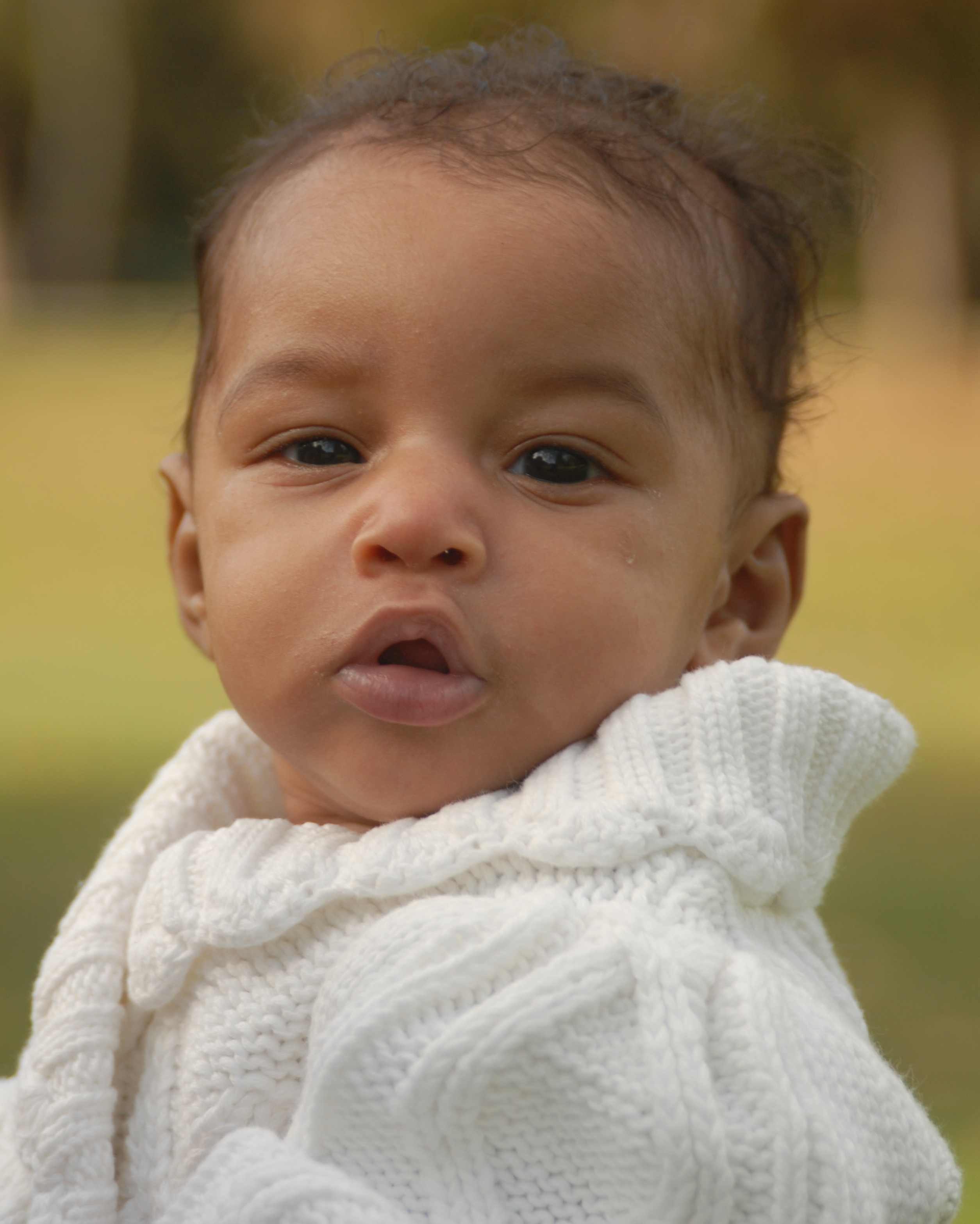
And yet. There’s something to be said for popularity. Aren’t political races essentially popularity contests? Doesn’t the guy who is popular at work more likely to get the promotion? As a young Black kid, maybe my boy needs to put on a little bravado and bad-assed-ness to get by in school. I don’t want him to be all weak and punky. But I also don’t want him to be a bully. Maybe I’ll make him the nerdy kid who is popular and friendly and kind. (And as long as I’m wishing, cleans his room, obviously) Right now, his personality is sweet and funny. If a kid takes his toy, he just lets it go. He does have a temper, but he mostly just stomps his feet. He loves other kids. He sees other kids on the subway he looks at them and they seem to communicate non-verbally. It’s like he recognizes his people and wants to check in with them.

So I’m going to raise him to be a good person. He’s a good egg. We will continue to raise him to be a smart, sweet kid. He can be a leader and friendly. He can be tough, but know when to be regular again. I do not want him to be a jerk to other kids. I want him to be independent more so than popular, so we will definitely be encouraging critical thinking and a belief in himself so if he is picked on, he’ll have the inner strength and fortitude to shake it off. Also he’ll know that his mom will kick a 10 year-olds behind if that’s what she’s got to do.


So what about you? Do you think it’s important for your child to be popular? Are you raising her to be a free thinker, other’s people’s opinions be damned? Or do you focus on societal norms and encourage your child to stay within them because it’s safer? Or do you go back and forth, like yours truly? Why?

Grades Gone Bad

So, I received my grades for my first semester of Law School.  Needless to say, I didn’t do as well as I would have liked.  I was very disappointed in myself.  I talked with my friends and family, and realized something very important.  I did my best.  Not, the “hang your head in shame at defeat” best, but the “you have a full life and made important balance choices” best.  I realized that although I spent a lot of time reading, studying, and outlining, I also spent time helping my children with homework, going to classroom productions, and cheering for them at games.

My daughter struggles with articulation and language delays, and since she was my driving force behind my decision to attend law school, I would be remiss if I did not take the time to work with her, while I learn how to use the law to help all children in her predicament.  Yes, I initially felt inadequate, and less intelligent.  How did I not get A’s in every class I spent a lot of time studying?  I could ponder that forever, but the grades would not change.  I decided to not worry about what I did not achieve, and realize I did something amazing.  I followed my dream AND was a mother who was present in her children’s lives.  I was there to pick them up after their activities.  I was at (as many) my son’s basketball games.  I sat with my daughter each evening and worked with her on speech.  I was in the waiting room when my daughter had surgery to improve her hearing.  I watched my son open up about the life of a 4th grader.  I attended every doctor appointment, and wiped tears of frustration at the dinner table.

The grades I did receive would not have been possible without my husband’s patience, home cooked meals, errands, and housework.  Also, I had a sister who helped me with the children, so I could attend every class (with the exception of 1) the entire semester.  I am truly blessed to be a mom who doesn’t have to worry about working right now, and can follow my dream.  Above all, I am a mom who is showing her children that although sometimes dreams are deferred, they can be achieved.

Pray for me as I begin my spring semester this week.  I plan to do better at not only law school, but being Mom.

Top 10 Posts of 2011

Hi everyone –

It’s been a crazy, but fulfilling year for me, and I hope for you. I’ll keep this short and sweet – below find the top ten posts (based on page views during the year) of 2011, along with an excerpt so you get a sense of what we’ve been talking about. Things have been quiet around her lately, I know, but as soon as I drop this baby, we’ll be back!!! Lot’s of love to our readers and most importantly, to my fellow CocoaMamas who have diligently and lovingly contributed to this blog over the past year.

10.Why Can’t We All Just Get Along

I’m working this summer for a large urban school district that ranks at the almost bottom for educational equity. The opportunity and achievement gaps in this district are shameful. So when I go to work every day, and when I interact with my fellow interns who are working at other educational institutions this summer, I’m not always smiling. I’m not agreeing to so-called “community agreements” on how I’m supposed to talk about race, class, and power. I’m not giving everyone the benefit of the doubt that folks have good intentions. I’m not assuming that no one in the room is a racist.

9. Private Parts

“Yes, children, you can touch your private parts, your penis and your vagina, when you are in your rooms, by yourselves. But remember, no one else is to touch your penis or your vagina, you understand? Not mommy or daddy or anyone, unless you say it’s okay. And no one should even be asking to touch you unless mommy or daddy is there, like when we go to the doctor, you understand? And if someone does, you yell and say NO as loud as you can, you hear me? And you come and tell mommy or daddy, okay?”

8. On Baldy Heads and Aliens

As I thought about this, I looked around the playground. As much as we lament what little black girls go through with regards to their hair, I never thought about the fact that little black boys face their own hair issue when surrounded by boys who are not black like them.

7. Crunchy Like Me

So what does this all mean? It means that some practices that used to just be considered ‘old-fashioned’ are now known as granola. My grandma uses vinegar and baking soda for cleaning, but would I call her crunchy? She’s been doing her cleaning that way for over 50 years. I don’t think Blacks are crunchy, but maybe I’m wrong. I’m sure a variety of ‘crunchy’ habits are used by lots of Black families. I’ve seen many breastfeeding Black mamas. What’s old is new again and all that.

6. “for colored girls”? Nope.

Without “giving away” the movie, in typical Tyler Perry style, he wants colored girls to “take responsibility” for their condition, understand the men in their lives and why they do the things they do, to explain some of the complexity of black relationships. And that’s al well and good. But that’s not what “for colored girls who have considered suicide when the rainbow was enuf” was about. Because understanding the complexity of colored girls and their pain is enuf. Its enuf to say that I’m in pain because

i stood by beau in the window/ with naomi reachin
for me/ & kwame screamin mommy mommy from the fifth
story/ but i cd only whisper/ & he dropped em

without having to also “consider” beau’s pain and why as an abused partner and mother she didn’t leave him before. Its enuf to be in pain because I was date raped in my home without also visually suggesting that my clothing was actually suggestive. Its enuf to be in pain because my husband sleeps with men without having to also understand the “plight” of black men on the DL.

5. Can Fathers Walk Away From Their Children?

As a single divorced mother whose ex-husband walked away from his children for years because he claimed I was “too difficult” to deal with, I am a bit torn.  On the one hand, I understand why my friend’s family is telling him to cut his losses and move on.  On the other hand, as a mother, and having witnessed the beauty of his relationship with his child, I am loath to see that come to an end.  It feels wrong to me for a father to have to lose everything just to fight for the right to see his child.  But it feels equally wrong to me for a father to abandon his relationship with his child, no matter the price.

4. Do Black Mothers Raise Daughters, Love Sons?

Because my daughter is more responsible than her brother, I expect her to be responsible all the time. When she’s irresponsible, I get angry because “she should know better!” When my son is irresponsible, I chalk it up to his immaturity. When my daughter is petulant, whiny, tantrum-prone and defiant, I can’t stand it. When my son acts that way – well, he’s still a little boy. My daughter feels and deeply resents the difference.

I don’t know if it rises to the level of an epidemic, but lately I’ve seen a number of little girls – as in, girls under the age of 12 – wearing hair weaves, wigs and lacefronts.

As black women, our hair issues begin at birth. We black mothers study our girls’ hair texture, waiting to see if those fine baby curls are going to “nap up.” Some of us start putting that baby hair into plaits, cornrows and ponytails as soon as our baby girls are able to sit up. If there’s not enough hair to comb, we brush it as best we can and put a headband on our girls’ heads, so everyone will know the baby is a girl and not a boy (strangers still get it confused, though).

2. “No One Can Say Anything To Me…”

Let’s put out the disclaimer from the start: I’m not saying that Meredith Gray Ellen Pompeo does not have the right to speak an opinion on HBCUs or the NAACP. We live in a country of free speech, and I love a healthy debate. But what she did was try to pull our her “race-by-association card” – oh, yes, yes, she did – and THAT is unacceptable.

I’m sorry (actually, I’m not), but when will white people learn that no matter how many black kids, husbands, wives, girlfriends, boyfriends, coworkers, pastors, lovers or neighbors they have that does NOT give them an honorary black card?

When will they learn that their social and familial relationships with black people does NOT automatically remove their prejudices and biases or prove that they don’t have them?

1. Putting A Whooping On Spanking Statistics

I know I am opening up a huge can of worms (or whoop-ass, however you want to see it), but I came across this article while studying for finals last week and finally had a moment to read it today. It is fascinating….ALL parents should read it. Specifically, it shows how spanking studies over the past 40 decades have been skewed toward the researchers’ philosophical bias*, but against actual statistical results: while many researchers are philosophically opposed to spanking, methodologically sound research does not make the case. When meta-analyses of spanking research that meets high methods standards are performed, spanking has not been shown to be any more “harmful” to a child than any other tool of punishment, including time out.

That’s it. To end 2011, love your family, kiss your children, hug your friends. We’ll see you on the other side.

Much Love,

LaToya

Coming Clean

I have secrets. Several of them, to be more accurate. Secrets that I am not so much ashamed of, but are reluctant to tell people about. Reluctant because I don’t want to be judged. Reluctant because I don’t want to know people’s views on these sorts of things. Reluctant  because I’m just trying to live my life the best way I know how for myself and my family. Reluctant because I feel like until you’ve walked a mile in my shoes, you can’t tell me a got-damn thing. Reluctant because black folks in particular are real iffy about mental illness and medications.

I’m pregnant. 21 weeks, 22 on Thursday. I’ve wanted this baby for a really long time. This baby is probably the most anticipated of my three children, as I always had this idea that three children would make my family complete. This pregnancy has been tough, perhaps tougher for me than the others since my illnesses now have names and recognizable symptoms. I’ve done a lot of work over the past four years since Little A’s birth to keep myself healthy.

But I’m not cured. Bipolar disorder does not go away. It must be managed and treated, consistently, continuously. So even though I am pregnant, I’m still on an antidepressant and an anti-psychotic, at relatively high doses. But being down to two medications is a victory for me, as I started out on five. And one that I finished only after I became pregnant is one known to increase the risk of birth defects. But I’m still stable.

Stability is a shaky thing. I’m not taking anything for the fibromyalgia, which is likely contributing to my aches and pains in this second trimester when I really shouldn’t be feeling this bad until the third trimester. I stopped my sleep aid, even though lack of sleep triggers hypomanic episodes. And the one that causes birth defects also helped with the body aches, and the headaches too. Between weeks 9 and 12 I had a migraine every single day. And stable doesn’t mean “like normal.” I missed the entire last week of classes and barely scraped together enough legal knowledge to get through exams. And now, I haven’t left my house in two days. I don’t feel depressed, just sluggish, but I would be doing better, I am convinced, if I was on my other meds.

I want to get off these last two drugs, but I don’t know if I can. My baby appears to be perfectly healthy, growing wonderfully with a strong heartbeat and none of the defects that the bad drug could have caused. He is likely to be a world-famous gymnast with the all the tumbling he is doing in there – sometimes his movements make me nauseous! But in the third trimester, which begins next month, getting off the drugs would likely be very beneficial for my son. While I was on the antidepressant for  my other two children, we now know that third trimester use my cause issues with breathing and tremors after birth. And with the anti-pscyhotic, tremors and withdrawal symptoms of diarrhea, dizziness, headache, irritability, nausea, trouble sleeping, or vomiting may occur. But if I don’t stay on, I could have an episode that lands me, for the second time, in the psych ward. I would do anything for my kids, but I can’t imagine that being hospitalized would be good for any of us, my two big kids especially.

I also want to breastfeed, an experience I really enjoyed with my other two, even if it was hard going in the beginning. But both of these drugs are found in breastmilk. Studies conflict over whether the amount is enough to cause worry.

Bottom line is: I want to be “clean” so bad. I want to be “normal” so bad. I want my kids to have a great life so bad. But this may be one of those times that getting clean is not such a good thing. It’s one of those times where having a happy mama may be “better” than having a totally organic, medication free baby. It may be one of those times that we have to give up what we want in the short term to make room for infinite blessings down the line.

It may be one of those times, but how will I know?

Mother’s Guilt

As some of you know, in addition to being a wife and mother, I am a first year law student.  As of this moment, I have completed 3 exams, and will take the final one this Wednesday.  I feel accomplished, but most of all I feel extremely guilt.  

I feel guilty because I have worked extremely hard all semester, but at the expense of spending time with my children.  I feel like my actions were selfish, not because I did not spend more time with them, but because I am happier than I have been in a few years.  I feel like my happiness was to their detriment.

Mother’s guilt is a very strong emotion, which many mothers feel at some point during raising their children.  This feeling is not reserved only for working mothers.  A mom could feel guilty simply for going out to dinner with friends, even if they stayed home all day with their children.  At this moment, I feel guilty because I have neglected my children for the past 4 months, just so I could do well on 4 exams.  

Although law school is stressful and time consuming, it doesn’t negate my love for my children.  I have to constantly reset my brain each day to make sure i do my best to show my children I love them, and that I want the best for them.  This task proved very difficult throughout the last 4 months.

Although my brain is telling me that my children a mother who is happy and excited about life, therefore they are happy as well, I can’t help but think about whether or not I should be a stay at home mom who is there for my kids when they get off the school bus.  Am a being selfish in my own quest for excellence at the expense of my children’s growth?

How do mothers in the world feel about mother’s guilt?  Do you feel a mother who did not previously complete their career goals, should wait until their children are older before they work toward their dreams?  Should they work toward their dreams while raising their children?  Do you feel that such a strong emotion is different for each mother, and should not stop a person from creating their own happiness?  Tell me your thoughts.


Oh Na-Na…What’s My Name?

If you didn’t know (and now you do): I’m pregnant! Even though I’m only 17 weeks and looking like 30 weeks, I’m doing well and feeling okay. I’m as tired as I’ve ever been, but writing fellowship applications while attending classes plus running after two kids will do that to you. My pregnancy is the reason things have been kinda slow around here.

So even though I’m not yet halfway through this pregnancy, and I don’t know the baby’s sex yet (but I will find out December 2!) I have been seriously investigating baby names. As you know, my kids both have names that begin with “A” and, as you may not know, both names are Arabic in origin. Most likely, we will continue with that pattern, but it wasn’t easy getting there in the first place.

When we decided on our son’s name, who is the oldest, my husband had reservations about using an Arabic name. Only five short years after 9/11, he was concerned about possible discrimination our child would face simply due to his name. And I’m sure his fears were well founded; many audit studies show the discriminatory effect of the perceived racial background of job applicants based solely on their names.

And just recently, someone told me how they “hated” my first name, even though it’s a name this person was also associated with. When I inquired as to why, they replied, “Because it’s so ethnic.” Their feeling was that stereotypes and negative connotations follow a name like LaToya from jump street. With a name as undeniably “black” as LaToya, people with this name have to work extra-hard to overcome initial prejudice before they’ve even been given a chance.

Her concerns aren’t unfounded; in fact, “LaToya” is a name commonly used in job discrimination audit studies. People with my first name get 50% less calls for interviews than those with “white” names, like “Emily.” When I was young, I also kind of hated my name – it sounded ghetto, hood. I was a bit embarrassed to have such a stereotypical black name.

Of course, my feelings have completely done a 180. First, I like my name. I like writing it with a loopy L and a elegant T. It’s a happy name. When non-Americans hear it, they always comment on how pretty it sounds. They don’t have the same racial baggage that we have here – LaToya is just another name.

Second, I think people should name their kids whatever they like, without fear of ridicule. It really bothers me when folks make fun of the “made-up” names that many working-class and poor black parents name their kids. Once upon a time, “Emily” was a made up name too. Almost all names can find their origin in something that wasn’t the name of a person; Emily (according to some sources) is from “the Latin Aemilia, a derivative of Aemilius, an old Roman family name believed to be derived from aemulus (trying to equal or excel, emulating, rival).” Imagine the first time someone tried to name their daughter Emily. Other folks were probably like, “What? You just named your kid ‘rival’?” I personally find it refreshing that our people are so creative!

Lastly, I’ve come to the conclusion that we should not bow down to racism and prejudice by changing what we do. I can’t teach my children to not judge a book by its cover if I also advocate for folks to change what they would do naturally in order to give off the “right” impression. Furthermore, how many beautiful names would be sacrificed because we don’t want people to know our children are black? Should we all be named Emily or Greg in order to confuse the race gods? Or should we focus on more important things – like making sure all the Sheneneh’s and Bonquishas know how to read?

It is definitely possible that my name has, in some way, held me back. Obviously not too much, since I am a graduate student at one of the world’s most elite universities, with a named fellowship. But even if it had – I wouldn’t care. Who I am is so much more than my name, and I don’t care if people know I’m black before even seeing me. That is their issue, not mine. In fact, being black is something I’m proud of, and if my name introduces that before I can get a chance to, all the better.

(And this is just my jam!)

Loc’ing it Up

Little A’s came out of the womb with almost no hair at all. It wasn’t until she was almost three that her hair began to grow. Little A’s hair is soft and fine. In the sun, it glistens with hints of red.  When brushed, it can be brushed straight.  When left alone, it curls into large corkscrews. It tangles and knots easily when not braided or combed every day. It will begin to loc after several days of being let free.

A typical morning of grooming sounds like this:

“Ouch!”

“Ouuuuccccchhhh!”

“No more comb, mommy! I can’t do it! I just can’t do it!”

These are the protests of my little girl as I comb her hair.

I remember HATING to get my hair combed. No matter what the size of the comb, I remember the feeling of my head being yanked as my mom attempted to pull the comb through. I remember enduring the cornrows and braids so tight so that they’d last all week. I remember crying. I remember pain.

I don’t want that for my little girl.

I never want her to feel like she has to endure pain in order to “look good.” I never want her to dread a specific part of her body. I never want her to believe that something on her needs to be fixed.

So, I’m contemplating loc’ing her hair. My own hair has been without chemicals for about 10 years and loc’d for five. While sometimes I am annoyed with my hair, mostly due to my own lack of creativity, I think loc’ing it has been the best decision I ever made for it. Hair is never no-maintenance, but five years in I wash every two weeks, quickly retwist, which takes an hour, and the lightly oil and brush every other day. No pain. No dread. (No pun intended.) I can wear it back, out, up, straight, crinkly or curly. And it just keeps growing.

When I’ve contemplated this before, loc-ing my little girl’s hair, and aired my thoughts, I’ve gotten all kinds of opinions, the most oft being “Don’t do it!” When asked why, folks usually reply that loc’ing is permanent, and therefore not a decision a parent should make for a young child because “What if they don’t like it? Then they’ll have to shave their heads!”

I think these opinions have more to do with how people feel about locs than any legitimate concerns about child autonomy.

First, we already make so many decisions about our children that are “permanent” — they wear the clothes we want them to have, their dietary preferences are shaped by ours. And I do my child’s hair almost every day in the way that I want it. She’s only 4. Second, it’s only hair. I’ve rocked the TWA, BFA (Big Fat Afro), braids, twists, and press-and-curls. And, as shown above, Little A is adorable with no hair 🙂

I think people who have these opinions are just not comfortable with locs in general.

They think it’s too “ethnic”, too “black”, too much of a statement maker.

They think putting locs in a child’s hair is like expressing your political views on your children.

So what if it is? If the political view is that I want my little black girl to love her hair, and skip the years of self-hate I had about my hair – what’s the problem?

they learned it from watching you

My four year old is the only black girl – hell, person – in her preschool. Last year this wasn’t the case, as her brother was there with her. But this year she is all alone.

Last year, there were some problems with “mean girls” – yes, in preschool. They would exclude Little A, and if there is one thing Little A cannot stand is being excluded. Even when children tell her they won’t be her friend, she replies, “Well, we don’t have to be friends to play together.” Yeah.

So imagine how pissed I am that now children in the preschool are still excluding – but making it explicitly about skin color, eye shape, and hair texture.

What is the school doing about it? Well, first they discussed it with the kids, pointing out how the teachers (none of them black, but two white, one southeast Asian and another east Asian) are all different but they all like and love one another. Next they plan to consult with folks who have experience handling this in early education. They also talked to a few parents, three of whom have a child of color and the other a parent of a white child, because “those were the names that came up.”

Will there be a parent meeting about this? Well, yes, but no date has been set. And their next step today in this conversation? Talking about animals.

Animals.

This whole situation pisses. me. off.

One, this is not a new issue, so I’m quite annoyed at the school’s reactive posture. This should have been seen as a possible problem from what happened last year with exclusion, and me specifically bringing up the problem of race and racial differences. Why they are unprepared for this blows my mind.

Two, why only have conversations with the children most negatively affected – the conversations should really be with the parents of white children. They are the ones doing the excluding. They are the ones acting out racial prejudice.

Which leads me to my last issue – having the teachers address it in school is fine with me, but let’s please recognize that these children learned this behavior at home.

They learned racial prejudice and exclusion from watching their parents.

Young children emulate their parents. They think their parents are the best thing in the world. And in thinking so, they copy what they see their parents doing. I know, because my kids, at 5 and 4, are copying me all the time. My son wants to “wear pajamas like Mommy.” My daughter tries to match my clothes each day. They talk like me, use the same idioms as me.

And while being an overt racist will probably lead to racist kids, you don’t need to be a verbal racist to show racism in your life. You don’t need to say that black people are bad or Asian people are weird for your kids to learn racism. They learn it through the daily experiences of our lives, from what we watch on TV to the people they see on the street everyday. And most importantly – who you hang out with, who you invite over, who are obviously your friends send messages to kids about what you value as a family. For my kids, living in an area that is 2% black, we practically have no choice but to live truly multi-racial and multi-cultural lives. We have white friends who come over, who are obviously mommy and daddy’s friends. We have babysitters that are white. We have good friends of practically every race. And our kids know they are our friends because we talk about them, we hang out with them, they have a constant pressence in our lives. So our kids don’t get any idea about excluding children based on race or appearance.

For (some of) these white kids though, their lives are white. Their parents don’t have friends of other races – they don’t have to. Their kids witness their parents having mono-racial ideas of who is worth hanging out with and who is not. And while kids may not, at this age, put an inherent value on thing like skin color, hair type, and eye shape, they do recognize difference easily enough to see that the only place they interact with people not like them is in school. And they make an inference that if Mom and Dad don’t hang out with these people, then I shouldn’t either – for whatever reason.

This is a nasty lesson to start learning at 4 and 5. I’m determined, however, to make this a teaching moment for all involved, especially the white parents.

Put on your dancing shoes

by cocoa mama contributor rlb08863/mamatiti

I know that seems like an odd title given the events of the past year. We are coming fresh off the state sanctioned murder of Troy Davis. The anguish, pain, frustration and rage are still right under the surface. There was the trial and conviction of Raquel Nelson* who was senselessly charged with the vehicular manslaughter of her son despite the fact she was not driving and did not even own a car. There were the racist anti-abortion ads that cropped up in urban areas across the country, with a keen interest in black and Latino neighborhoods. There was the day of national shame when our President had to produce his birth certificate to the nation to prove he was in fact born here, a real American and thus fit to serve in a position that he was elected to. Across our great, post-racial nation, there are laws that seem to be in competition to see who can be the most xenophobic, the most anti-woman, the harshest against the poor and working class, the most draconian against sex workers, all in an effort it seems to prove who is the most American. The year started off horribly with the news out of Cleveland, Texas where an 11 year old Latina girl was gang raped by at least 20 black boys and men. The response by that community, in particular the women, seemed to confirm that the world was in fact going to hell in a handbasket.

So it would seem frivolous at least and idiotic at the most to ask any of you to dance. For many of us, myself included, dance brings to mind images of joy, abandonment, of lightness and exhilaration. We think of proms, weddings, birthday parties, and summer barbeques. It is a time of celebration and validation. It is more though than just a good time.

Our foremothers and forefathers understood  this. They knew dance, movement whether in harmony with other bodies or swaying on its own, was a way of communicating with their homeland. It was a way of connecting with the earth, sky, smells and sounds that had been so cruelly and irrevocably taken away from them. When they got together with a drum, all of the day events, the degradation, the pain, the suffering, the blood, the sweat, the anguish was expelled just for a moment. So long as their bodies were in motion, no matter the amount of time, the dance was the spike in the eye of those who thought they owned their minds and spirits along with their bodies. As arms, legs, torsos, necks, breasts moved, they became birds, antelope, fish, butterflies, and snakes. For that moment, they were free.  Lest you think this is trivial, think to many black churches who still understand the power of dance – yes “a shout” is a dance. The transformative nature of movement still has a place after all this time.

We need to dance by ourselves, with our children, our partners, and our families. We need to put the good foot down so that our sons and daughters will see that the world has not defeated us, has not taken away our joy. We need to throw our heads back and lift our hands while we shake our tail feathers so that we can get it all out. All of the disappointments, inequalities, the setbacks, the downgrades and the layoffs. If the sweat gets in your eye, wipe it away and keep dancing. The world, the Tea Party, Republicans, those on Wall Street, the rich and elite, want us to be defeated so that we can’t fight. They do not know about our ancestors and the power of movement. They forgot – or never knew that slave revolts were started by drums.

When you dance, laugh, cry, shout, twirl. Hold your children. Be silly. Jump on the furniture. Do a conga line around the kitchen table. Do a dougie in the family room. Hell, do the Macerna.  Just don’t be still.

After you are good and worn out, rest. Eat. Laugh some more. Snuggle or meditate alone. Call someone you haven’t in a long time and tell them you love them.  Take a nice hot bath or shower.  After you put your children to bed, if you are able make love to someone you love. Sleep as much as you can. In the morning, you will be clear-eyed, determined, steadfast and most of all, ready to fight like hell.

* Because of the power of  black blogs,social justice blogs, Facebook, Twitter, other forms of social media and ordinary citizens who were rightly outraged by her plight, Ms. Nelson was offered a chance for a new trial.

Beautiful Cocoa Babies and the First Day of Kindergarten

On September 8, 2011, my 5 year old daughter started Kindergarten.  She got on the “big girl” bus, along with her brother.  She entered a new school, met new children and began her adaption to a new environment.  She was resisting all the way, because she loved her old school.  She was petrified.  I tried to assure her it would get better, but in all honesty, I was afraid as well.

I am sure you all know children (some of them are your own) who are social and confident and excited to make friends.  My little girl is super shy and afraid of everyone and everything.  I felt so many emotions for her, and I felt like I was starting Kindergarten too.  My initial fear stems from issues I have been working out of my daughter since she was about 2 years old.

My thoughts throughout this month since the first day for her has included the same question every day, “Sweetheart, who did you play with today?”  She started out with one friend, and then within days decided that she was not her friend because the little girl decided to be friends with someone else.  I happen to be friendly with the child’s mother, but decided my little girl must learn an important lesson early, friends will come and friends will go.  I was however happy about one important thing, she stopped obsessing over how people look.

My biggest concern with my daughter regarding school has been her obsession with color.  She once believed that she could not be friendly with people who were not brown, and had a real issue with color.  It was the opposite of her initial reaction to color, where at age 2, she went through this stage of wanting to look like Barbie (blonde hair, blue eyes).  I counteracted it with plenty of Princess Tiana, and I ended up with a “black is beautiful and everyone else is not” child.  Now, thanks to Kindergarten she is finally realizing that she is beautiful and everyone else is too.

I have realized during the past 20 days, that everything you really need to know you learn in Kindergarten (or preschool depending on the situation).  You learn how to make friends and how to share.  You learn how to write and read, and count (yes moms, I know you taught your children how to do that by age 3).  You learn many life lessons that you use for many decades to come.  These lessons help mold you into the adult who can change the world and link all people together.  Thanks Kindergarten.