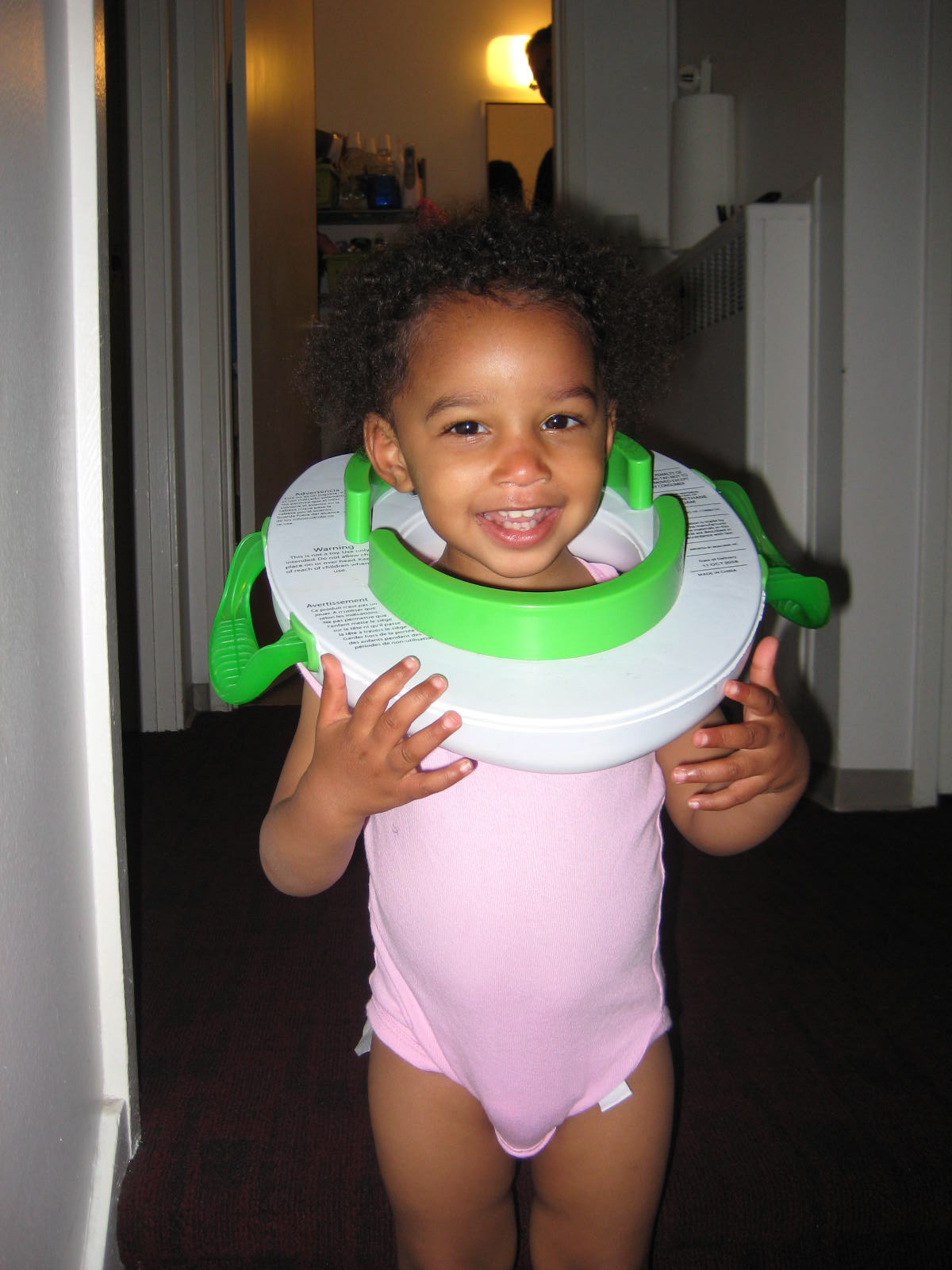
My daughter has recently become obsessed with the Reading Rainbow Theme Song. Tweeners like me know the ditty by heart, but when my toddler sings it, it sounds something more like this:
BYE-BYES *indecipherable* SKYYYYY
*indecipherable* HIIIIIIIIII
*babble* OOK!
*babble* OOK!
BE BOW-BOW!
Fittingly for a child singing about rainbows, she’s also started learning her colors:
“What color is the sky?,” I ask.
Blue!
“What color is the grass?”
Geeeen!
“What color is your skin?”
Rown!
“Yes, Baby,” I respond; “Your skin is a beautiful, beautiful, brown.”
It frustrates me that I don’t have more names for the spectrum of colors in the brown category. When pointing out the skin color of white characters in her books, I can use words like white, cream, peach, pink, rose, and tan. When the characters are black, I’m stuck with brown; maybe mahogany or cinnamon if I’m feeling really creative.* My lack of words for brown says as much about our dismissal of all things (and people) black and brown, as much as my internalization of that dismissal.
Despite the hole in my vocabulary, however, I’m trucking along anyway, determined to continue talking about skin color with her because I know the best way to raise a racist child is to avoid talking about race. I also know that in failing to talk about skin color with children, we teach them that the subject is taboo, making it difficult for them to have productive conversations about race later in life. I am reminded of this when my students, six weeks into a course on race in the public education system, still clam up at the start of class, awkwardly stumbling into language about “blacks” and “the races” only after insistent prodding by me. I am reminded of this by the guilty silence of my colleagues in response to observations at a recent faculty meting that we haven’t had a scholar of color give a talk at the school in two years. I am reminded of this by the radio silence I encountered in response to my explanation to a white peer that I picked a particular pre-school for my child because there were black dolls in the classrooms.
I am determined to raise a child who is comfortable talking about race, skin color, and it significance in our society. Although it’s likely wishful thinking, maybe her generation will revolutionize the discourse on race in our country, finally acknowledging worth and beauty in the rainbow of skin color among human beings. In the spirit of such a revolution, I say Power to the Bebow!
*The author welcomes suggestions!







 CocoaMamas

