Drowning in Fear

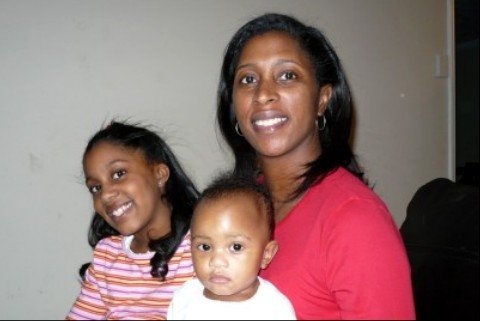
Today was our first day of swimming lessons. While Ahmir, my 4 year old, was like a fish out of water – scared, timid, shaky – at least he resembled a fish. I was amazed at what the instructor got my notoriously skittish little one to do – let go of the side (while holding him, of course), straighten out his arms like an airplane, kick, put his chin and eventually his mouth in the water. My daughter Amina, on the other hand, at almost 3, actually cried and wouldn’t get into the big pool. She did eventually walk in the baby pool, with much prodding by me, but she did not live up to what I expected for my $24 half-hour lesson.

But we are going to stick with it, as ridiculously expensive the lessons are, because I want my children to know how to swim. Black children drown at a rate of almost 3 times that of white children, and mostly that is because they don’t know how to swim. I can understand, because embarrissingly enough, I also don’t know how to swim. Many black adults, epecially those that I know were raised in the Northeast region of the country, don’t know how to swim. And while the reasons run the gamut from lack of access to pools (the public pools in Philly during the summer were so jam packed there was no room to swim!), to the expense of lessons, one of the most troubling reasons is a fear of water.

Again, I can understand. I’m terrified of water. Really, I’m terrified of drowning. But isn’t that ironic – I’m scared to drown, so I don’t learn to swim?

Fear is drowning us adults and our children, and honestly robbing them of a sport and a exercise that does not need to be held back from them. Granted, the lessons are hella expensive, and my checkbook is hurting right now, but I know that I am giving my children a skill that lasts a lifetime. Furthermore, water is one of the most precious things we have on this earth, and one of the most beautiful. When I hear of people diving off cliffs in St. Lucia into pristine waters, or exploring underwater caves, I want my children to be able to experience this wonderful natural resource and engage with it, not be in fear of it.

And you are probably asking – well, what about you, LaToya? Are you going to get over your fear and learn to swim? As soon as a recreation class in beginning swimming fits into my schedule, I’m there. I don’t want my life ruled by fear of anything.

P.S. And while we’re talking summer health, don’t forget the sunscreen. Brown folks do get skin cancer.

Share

Back In the Game

My baby turned six yesterday. And though it was a day like any other, this particular birthday felt significant. When my daughter was born six years ago, I stopped working. I had always felt that the first five years in a child’s life are significant and wanted to be around for them, though it felt like such a luxury for us to try to live on one income alone.


And though I admitted it to no one, it was good timing in other ways. I had been working in a career I disliked for so long without really knowing how to shift direction into another industry I longed to be a part of. The baby provided a perfect excuse for me to step off that first roller coaster and reassess, though I assured myself and my husband that I would stay home for only one year only before I would start looking for another job.


A year and half later, my second baby was born and that stretched out my hiatus for another year and a half. And then we moved and then life happened in all its messy, dramatic glory. Six years later and my baby girl is preparing to enter first grade in a few months and my boy will turn five several months later. And I’m back at that same place I was six years ago, albeit with a few more gray hairs, and three or four more suitcases’ worth of life baggage.


I’m getting ready to step back into the race, though this time I have more clarity about what I want and maybe even more audacity. I’m intent on trying to connect to my purpose, to be of some sort of service to humanity, and to do what makes me happy. And though I’m doing it all for myself, a part of me knows how important it is for my children to have a mother who is fulfilled, productive and happy.


And if I fail … well, maybe it is equally important for my kids to see how important it is to reach for the stars, even if you can’t always touch them.

Five for Fighting

I was talking to a co-worker recently and the topic of kids fighting came up. The conversation started with my concerns about my middle daughter going to middle school next year. My co-worker mentioned that her niece had begun taking a switchblade to school because she HAD TO for protection. I mentioned that I had never been in a fight as a child, which struck her as odd. She then relayed the story of how she had once come home crying and her father said to her that she had to go back out and kick the ass of whoever had made her cry or that he would kick her ass. And so she fought.

I’ve never had that conversation and I don’t plan to. I can almost understand the logic (show & prove, do it this one time and then people won’t mess with you) but I don’t like the message that it sends – that there must be fighting, whether at home or away. With so much violence in the world, and so much of it directed at us, I just don’t feel comfortable encouraging more of it. I’ve always thought of home as a place away from the stress of the world, and encouraged my kids to feel the same way. My parents were there to protect & support me, not beat me for feeling hurt or angry or confused.

My sister and I were not allowed to fight each other at home. My mom’s mantra – a house divided against itself cannot stand. And so there was no fighting. My kids are not allowed to hit each other. They are not close in age (15, 10 and 3) so it doesn’t come up too often but they know that it is not cool.

What are your thoughts? Did you get the “kick their ass or I’ll kick yours speech”? Would you allow your child to carry a weapon to school?

If your child is being bullied at school, please check out http://stopbullyingnow.com/

Andrea is a mom of 3 (son is 15, daughters are 10 and 3), and a serial entrepreneur. She is currently working as a clinical informatics consultant, and couldn’t do it without the help of her mom who is her nanny while she’s out of town Mon – Thurs. She is a great believer in personal responsibility, good grammar and the power of ice cream. She is an omnivore who loves to cook, is trying to eat healthier and give her kids fewer chemicals. She needs to exercise consistently and drink more water. She’s in the process of getting divorced from a nice guy.
Bookmark and Share

No Boy Is an Island

I tend to follow Benee’s and the other Cocoamamas’ pieces about raising boys closely, without really daring to interject. The fact is that my own relationship with my mother—with all its glorious and inglorious extremes—has driven me to form some very firm opinions about how to raise my own daughter, but I’ve given far less conscious thought to raising my boy. I know I want him to be respectful of women (and everyone really, but especially women) and kind and service-minded but beyond that, the canvas has largely been blank.

My boy is challenging in a different way than my girl. He’s loud and impulsive, can’t sit still and concentrate for long periods of time, tests boundaries constantly and can be found bouncing off walls quite often. I’ve generally shrugged at his behavior and observed: “It’s all that boy energy!”

An incident last week started an avalanche of questions and thoughts in my head, prompting me to rethink my strategy. We have observed for a while that while my girl (who is 5) can accept a no as a no, my boy (who is 4) thinks no is his cue to start a maddening crying and whining campaign to get whatever it is he wants. My husband and I have had a long-standing rule about whining: We don’t negotiate with whiners. And so when he begins whining, I walk away: no explanations, no sympathy, no begging and cajoling.

I thought our rule worked well until the other day when my four-year-old turned to me and said: “Mama, how come when Mina (his sister) cries, you be nice to Mina and when I cry, you get mad and be mean to me?” And two beats later, his sister chimed in: “Yeah, mama, I’ve noticed that too!”

Ladies (and gentlemen): This question stopped me cold in my tracks. My boy, my beloved boy, was hurt because he felt that he was being mistreated. That he was being treated unfairly. And, at 4, he is not necessarily connecting the dots of varied causation: that he gets no sympathy because he cries mostly when he’s whining whereas she gets sympathy because she cries mostly when she has hurt herself. All he knows is that when he cries, we get stern, and when his sister cries, she gets sympathy.

And we are not connecting those dots for him. We’re just expecting him to get it, to intuit the difference in treatment, and to be a boy and get over it. There is a lot of emotional nuance, most of which is not being explained in the way it needs to be.

I went in search of more information and found this blurb in Dan Kindlon’s Raising Cain: Protecting the Emotional Life of Boys, which really resonated with me:

There is plenty of reason to be concerned: a confused young boy grows into an angry, emotionally isolated teenager, and, predictably, into a lonely, middle-aged man at risk for depression … Boys need an emotional vocabulary that expands their ability to express themselves in ways other than anger or aggression. They need to experience empathy at home and at school and be encouraged to use it if they are to develop conscience.

All this is not to say that my boy is now going to be coddled and get his way when he whines. But I intend to be more expressive about why I’m not sympathetic to the whining, about how much he is loved, how sad I am when he is hurt, how much compassion I feel for him when he is frustrated or angry. He may still be one hyper bundle of pure boy energy, but surely he is just as deserving as his sister of the emotional exchanges that come with the childhood hurts and tantrums.

When did we sign this silent pact that our boys are to be islands, cut off from the same emotions and connections we provide so freely to our girls? I don’t know how and where it all got started but I, for one, am out.

Raising A Boy To Become A Man

I’ve been a mother for about 3 1/2 years now, but before I even conceived, I’ve engaged in the conversation about whether or not women can teach their sons how to be men. On the surface, the answers may seem really simple: Yes, of course or No, of course not. Having engaged in this debate and heard many sides, I wanted to perhaps begin a discussion here on Cocoa Mamas about this idea.

This debate usually comes about when discussing single motherhood. The statistics state that 3.1 million Black mothers are single (unmarried or divorced) which means that at least 3.1 million Black children are being raised without a father figure in their home. This is not to say there is no paternal presence at all, it just is not in the home. In all fairness, that 3.1 million figure does not break down whether or not these women share custody equally, are simply unmarried/divorced (meaning they could have a significant other, male or female), or if they are even custodial parents. If you’ve read my blogs, you know that I’m not the primary custodian of my son, but I do consider myself a single mother.  For argument’s sake, let us assume they mean 3.1 million Black women are raising children on their own, as primary custodians.

So if we assume about 40-50% of those homes contain male children, we’re dealing with about 1.5 million women who have to figure out the best ways to raise their sons  to be intelligent, sensitive, caring, respectful, hardworking, strong Black men.  These will be men who will venture out into the world bearing with them the perspective and world views instilled in them by their mothers. Roughly 80% will carry these views into their interactions with women.  These mothers have to take into account all of the demands society places on men in general, as well as all of the negative statistics about Black men and the lowered expectations by that same society, and try to do their best to produce the most well-rounded, adjusted, positive men possible. 

As one might expect, this is a daunting task. 

Obstacle #1: Women are NOT men. We are physiologically, mentally, and emotionally different. Some things are purely biologically based while others are due to socialization. This creates a disconnect.

Can women overcome this in some ways? Yes, absolutely. We can teach our boys how to pee standing up. Can we relate to the external sensation of having to pee? No.  Can we talk to our sons about wet dreams? Yes. We can even explain how semen is formed, how is travels, and how it shoots out. Can we relate to the embarassment of spontaneous erections 15 times a day? No. The question is then: Are we inevitably disconnected from fully engaging in intimate discussions with our sons about things we have never experienced and cannot relate to? What say you?

Obstacle #2: Boys learn differently than girls. Women tend to teach their children things the way they process them themselves, which does boys a disservice.  Their brains are wired differently and if we cannot teach them along those lines, we risk alienating them.

Most of us do not realize this and we get frustrated when it seems our sons are knuckleheads when they begin to drift off in school. Or we are bothered when our toddler and pre-school sons are running on 150 tons of energy and seem to absorb more of what we say when they are in that state than when they are sitting still quietly, as we have asked them to do 1473 times in an hour. We want them to process what we are teaching as far as manners, respect, and social behavioral norms, but we are teaching them the way we see it and the way we learned it, which is not registering the same with them.  Does this mean there will inevitably be a disconnected between what we teach and what they learn from us? What say you?

Obstacle #3: Women cannot effectively lead by example. Boys and girls generally model their behavior after their parents and those closest to them.  A woman cannot role model being a man.

This is probably the biggest issue that comes up and pretty much encompasses the majority of the debates/discussions. We assume, of course, that there are set codes and standards of masculinity and manhood. (I reject that because I reject heteronormative thinking ,but that’s another blog). We assume that women cannot emulate those standards and therefor, they cannot effectively set the appropriate example of masculinity and manhood. (Again, this does not allow for varying gender identities that female-sexed individuals self-identify with).

Can a woman teach her son how to play basketball? Yes. Can she teach him how to change the oil in the car? Yes. Can she teach him to say “Please” and “Thank you” when interacting with others? Of course.  What she cannot do, as a single mother, is model how a man should treat a woman.  She can speak, write, teach, tell him on the telephone until she is blue in the face, but if that boy does not bear witness to his mother being treated in a positive way by an authoritative male figure, I posit that there IS a disconnect in his understanding of how to treat women (even with his own father or another father figure present).  That’s jsut one idea. What say you?

I did not dig as deep as I could have on this subject because I would love for people to weigh in and offer their own sides to the debate. I know where I stand and will respond in time.

Discussion questions:

Can women, single mothers specifically, effectively raise their sons to be “men”?

Does society’s notions of masculinity and manhood play a role in how women should be raising their sons?

If you are raising a son, what are you doing to ensure he is being raised with a strong sense of his masculinity (however you might define that for your family)?

Why do you think some women are successful at single-parenting sons and others are not as successful? What other factors do you think contribute to their successes or failures?


Bookmark and Share

Too Rich for My Blood

Today I had to fill out a form for a grant for housing assistance. It’s for money from a fund established here at school for grad students who live on campus who have two or more kids. The grant is typically about $1,250 a quarter toward rent that runs $6,125 a quarter, a nice percentage. At the end of the application, it asks how much educational debt you have in total.

Black folk tend to feel that education is the way out. I had an almost full scholarship to Penn as an undergrad. It was full less the amount the government said your family could afford to pay, which in my case was $5,000 a year. So my student loan debt coming out was about $20,000 because, well, you know that the government has little idea of what people can really pay. And $20,000 for an Ivy-League degree really ain’t bad. At all. But then on some bad advice from said Ivy-League’s career services (I should sue them once I get my law degree), I got a Master’s from Penn, thinking it was my foot in to get a Ph.D. since I didn’t have a liberal arts background. Terminal masters degrees are often called cash cows, because you usually get little financial aid and the University makes a killing off of you. So after one year, my $20K debt became $82K. Yes, a $60K masters. I’m suing. Seriously.

But it doesn’t stop there. Because once I get accepted into the PhD program here, at Stanford, I realize that even between my husband’s salary and my PhD stipend, we can hardly afford to pay rent and buy food, let alone put the kids in day care. So here comes more loans. Year 1: $7,000. Year 2: $14,000. Year 3: the year I have to pay for law school. Guess how much? Really. Guess. UPWARDS (because my budget allows for childcare) of $50,000 (I’m actually embarrassed to say exactly how much upwards). For ONE miserable year of school.

So the total educational debt I have for 8 years of college and beyond is upwards of $150,000. And I plan on being not a high paid lawyer, but an academic. Did I make a tragic error of judgment along the way? Is it always true, like many of us, especially in the browner communities, believe, that educational debt is “good debt” that’s worth the investment?

Last week, an article was published in the NYTimes about a NYU college student who had a lot of student loan debt. It basically blamed her parent and the school for her even going to NYU “without asking many questions about whether they could afford a $50,000 annual tuition bill” because they had a “grim determination” to “do whatever they could to get [the student] into the best possible college.”

I feel like I have been doing that, doing whatever it takes to get into the best schools (hence the $60K masters degree), but perhaps at the cost of mortgaging my family’s future. But that’s because I’ve been taught to believe that I deserve the best, just like everyone else, despite money. But what’s going to happen if I come out, yes with a PhD and a law degree, but in an economic climate where the environment is screwed up and the stock market is tanking and there are hurricanes and earthquakes every other day and the world has basically gone to crap and nobody is hiring sociologists and legal academics?? And my kids are still going to need to go to good schools, and I’m still going to want them to play football (the world’s version, not the American kind), and take dance lessons, and of course, sing and play the piano. But the banks will most definitely still want their money back. They’ll call my house phone day and night and once I get that turned off they’ll call my cell phone and once I get that turned off they’ll find a way to stalk me on Facebook. That day is coming, I can smell it.

Is educational debt still always good debt? Do you, dear reader, feel as though all the education that you have and paid for (or are still paying for) has been worth it? Will you encourage your children to take out the loans to go to the school of their dreams? Or will you encourage them to be “practical”, turning away from the $50K a year schools in favor of a cheaper, but less prestigious school?

I still have about 4-5 years to go, meaning my debt will probably be around $200,000 by the time I’m done. I’m taking donations. For real. I’m not kidding.


Bookmark and Share

Good Night and Good Luck

Let us discuss sleep.

Critical to our physical and mental well-being, sleep is a very important process when it comes to continuing health. Sleep is a natural restorative cycle. It allows the body to rest and properly regenerate itself. So that the body can continue to function appropriately.

You don’t know what restorative means? You can’t understand regenerate?

Well, if you want me to be nice to you, to be overjoyed to see you, to give you loves and tickles and rainbows all day, to happily drive you around from about 8 am to 6 pm, five days a week, and provide you with at least three meals and several dozen snacks of a wide and nutritious variety, let me sleep.

If you want me to read you Ricky Ricotta’s Mighty Robot vs. the Mutant Mosquitoes from Mercury at least once and possibly several times—in a row—without rolling my eyes, barfing or losing my mind, let me sleep.

If you want me to listen to one hundred and four rather unfunny variations of:

Knock, knock.

Who’s there?

Orange.

Orange who?

Orange you glad I didn’t say banana?

Let me sleep!

And just so we’re clear: By “sleep” I mean a solid 6, 7 or even 8 (*gasp*) hours of me, lying in a reclining position, covered with some form of a blanket. In the dark. And quiet. With my eyes closed.

Here’s what sleep isn’t:

If I’m fetching you anything, even water, at 2 am, I’m not asleep.

If we’re hugging, I’m not asleep.

Conversation of any kind means I’m not asleep.

If I’m freezing cold and have no blankets because you’ve decided you’re sweating and the covers must be kicked off, it is quite likely I’m not asleep.

And if you’re using your cute little chubby fingers to force up my eyelids, then I’m definitely not asleep.

I’m sure you’ve noticed but not sleeping makes me bitter. It also makes me look ragged and that makes me really bitter because then I don’t just look tired—I look tired and old.

So … either sleep—without moving, talking or doing the macarena—or go back to your own bed.

Or even better, you stay here with your dad and I will go sleep in your bed. Alone.

Good night.


Bookmark and Share

Do As I Say, Not As I Do

I’ve been mulling around this post for quite some time now. I think there is something to discuss when it comes to our diverse ideas of what makes someone a “good” or “bad” parent. I also think there are some things we can try to hash out as a group (and guests!)

Growing up, did we not always hear our parents say how they always want us to have more than they had, be better than they were? And did we not often have times when our parents did or said things that made us pause for a moment or made us think “Wow, but they said I couldn’t do that!”  The universal response has almost always been:

“Do as I say, not as I do”

I thought about this because I have a pretty foul mouth and my son has picked up some curses. I do not curse AT him or anything (I hate that), but I occasionally let a curseword slip by when I’m around him. It is usually when I’m driving. You understand. I am working on teaching him that he should not curse, but here iss the rub: I am not opposed to cursing, as a rule. I do not feel right telling him he cannot ever curse because I believe when he is older, he can speak as he wants to. I do, however, feel compelled to teach him that he cannot do so now, as a child, and as he gets older, I will teach him about times and place where it would be inappropriate to use such language.  Growing up, I’d never curse around my father. Now, we curse when speaking to each other occasionally. I’ll never forget when I was about 25, my dad dropped the F-bomb and said “Well, you’re old enough now. I know you curse, you know I curse.” Our relationship was forever changed by a four-letter word lol.  This is just one example.

There are things I do, that I do not think are necessarily wrong for an adult to do, but I do not want my son picking up or doing right now.  I battle with feeling like a hypocrite. Someone said I am too liberal a parent and that I need to keep it “old school”.  Here is the thing though… old school is not always right. In fact, “old school” includes a LOT of things I am very much against, with regard to child-rearing. I was called a liberal parent, as if it were a bad thing. I do not see a problem with making certain allowances for your child, if that is how you want your child to be raised. Understanding society’s limitations and expectations, however, I feel compelled to make sure my son learns certain ways of being so as to not get into “trouble”. As a Black male, he is “trouble” by virtue of his existence, if you let some people tell it. So I feel even more conflict in the things I let him do, the things I teach him, and how far I let him go.

When my son asks me about drinking, I’ll tell him, like my mother told me, he can drink when he can buy alcohol. I started drinking at 14. First time I got drunk, I as so hungover, my mother said, “Now you see what I mean”. She did not beat me, ground me, or anything. I did not drink again for at least three years. I grew up knowing my mother smoked marijuana. She supported its legalization, as do I.  She taught me that smoking it was not wrong, but that it was something adults should do. I do not think she was wrong for teaching me that.

So I bring it to you, dear readers… are there things you do that you do not necessarily want your children doing, but feel weird telling them that?

Are there things you are OK with your children doing now or in the future that others may frown upon? How do you handle that?

Black Weblog Awards

It’s that time of year again!

Nominations are being accepted for the Black Weblog Awards!!

While Cocoa Mamas is a fairly new blog, we’d like to think we offer insightful, intelligent, and relatable commentary on raising brown children in this world. We would love to get the word out about our blog and what better way than winning a Weblog award?

So, readers, subscribers, contibutors, pelase take a moment to go to Black Weblog Awards and nominate us in a few categories, namely Best Parenting Blog, Best New Blog, Best Group Blog, and Best Blog people don’t know about

Thanks,

Cocoa Mama Benee 🙂